

Heirloom Tomato Growing Tips

The yearly gardening season is just about on us and for many gardeners that means a heavy focus on tomatoes. Specifically, heirloom tomatoes, as their meteoric rise in popularity over the past few years would have many a pop and rock star green with jealous envy. The heirloom tomato seems to be almost everywhere these days, from high end cooking shows with their ultra-close-ups and glamor shots to many new cookbooks focusing on home-grown and locally sourced produce to Farmer’s markets, CSA’s and almost everyone’s home garden. Even die hard hybrid “Better Boy” and “Early Girl” gardeners that have planted nothing else for years are giving these wondrous beauties a shot.
With all of this attention being paid to the “Love Apple” as it was known in Colonial times, we wanted to give you a better chance of harvesting all of that potentially rich, complex, juicy tomatoey goodness that are only seedlings at this point.
Tomatoes are complex creatures, needing rich and well mineralized soil that is well drained and not over-watered. The simple, ruinous yet well intentioned act of giving tomatoes too much water most likely accounts for fully 75% of all of the problems with them; from soil borne fungi and other micro-organisms attacking the roots to fruit splitting, cracking and blossom end rot and ultimately the worst- flavor wash-out. Ideally, tomatoes like a lightly moist soil. The best way to judge when to water is by getting to know your plants and paying attention to the leaves. When the leaves just start to curl at the very edges or tips is when the plant is telling you it’s thirsty. Different varieties of tomatoes will have naturally curling leaves, thus the need to get to know your specific plants. Give them a drink, but don’t drown them. There has been multiple studies done that have clearly shown that tomatoes do much better with a little less water than a little more. Production, taste and disease resistance all increase when the plant is watered a full 25% less than what is commonly believed to be the “right” amount.
Now that we have the biggest issue out of the way, let’s look at some other techniques to get the best out of this year’s tomatoes! This is not an exhaustive, encyclopedic resource. There are many, many books available that are devoted entirely to the subject of fixing your tomatoes. What we want to do is give you some good, proven and easily used tools to help you get the best out of your tomatoes this year. Some of the most effective remedies are the simple and easily applied ones, as they are the ones that get used more often. So here we go!
-If you see brown or black soft spots appearing at the blossom end (opposite the stem) of the tomatoes, you have blossom end rot. This is caused by a lack of available calcium and can be easily corrected. Tuck a Tums or other antacid tablet or two into the base of the roots and give them a little water to soften. The antacids are calcium carbonate and will quickly provide needed calcium to the plant. It won’t cure the existing blossom end rot- nothing can- but will prevent the next set of blossoms from having then same problems.
-A 10 – 20% milk solution used as a foliar spray is highly effective against mildews and tomato mosaic virus. This remedy was discovered by Wagner Bettiol, an agronomist from Brazil found that weekly sprays of a milk solution was faster and more effective than synthetic chemical fungicides. The milk solution controlled the fungi just as well, with the added benefit that it acted as a foliar fertilizer and boosted the plant’s immune system and production. This spray also works for zucchini, cucumbers and other cucurbits including melons. It seems to work on roses also!
1 Cup milk
9 Cups water
Mix well and spray on offending mildews, blights and assorted unwanted fungi.
-The baking soda/mineral oil approach has been around a long time and is familiar to long-time gardeners, but it bears sharing. Cornell University has research showing the effectiveness of this approach. The baking soda deters fungus spores, and the oil coats the leaves, holding the baking soda in place longer.
1 Tbs Canola or mineral oil
1 Tsp baking soda
1 Gal water
Mix well and spray directly on the fungal blights.
– To stop nematodes from attacking the roots of your tomato, insert old 1 to 5 gallon nursery pots that have been cleaned, disinfected and had the bottoms cut out into the soil leaving 2-3 inches showing. Transplant your tomatoes into these guards. For heirloom tomatoes, the larger the pots the better, as the root system can be extensive.
-Another preventative measure for blight and other diseases, sprinkle a handful of this mix into the planting hole before you insert the transplant.
3 Cups well aged compost or potting soil
1/2 Cup powdered milk
1/2 Cup Epsom salts
1 Tbs baking soda
Mix well and sprinkle a handful into each planting hole.
-For soft-bodied insects, the milk spray described above is very effective, as well as a simple home-made insecticidal soap spray. You must use soap and not a detergent. They are different in how they work. Soap will kill the bugs, detergent will often kill the bugs and your plants! You’ve been warned. One of the absolute best soaps out there is Dr. Bronner’s. You can get it in a liquid form, it is certified organic and won’t harm your plants.
1 Tsp liquid soap
1 Qt water
Mix well and spray on the unwanted critters.
-When the plants are really working setting flowers and fruit, use the Spring Garden Soil Elixir recipe and omit the Borax and cranberry juice. Mix as usual and give a light spray to the roots as a side dressing to give the tomatoes a boost in nutrients to keep the health and flavor up.
These techniques and tips will set you on the path of better, tastier and longer producing tomatoes this season. If you have an especially effective remedy or recipe that you’ve used to help your tomatoes do well, please share it with us!
 © 2024 Terroir Seeds | Underwood Gardens.


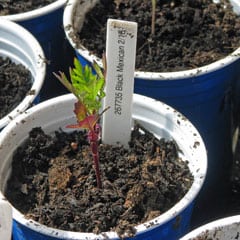
I find I have the best results when I transplant very young plants, usually just 3 or 4 sets of true leaves and always tuck 3 calcium tablets under the roots (our soil is highly alkaline and deficient in calcium), reapplying the calcium as needed throughout the season.
I also buy molasses in a big jug from our local horse supply/feed store, dilute with water and spray the leaves if they start to yellow or just look less than their best; it is an immediate pick-me-up for the plants. I spray in the late evening and again in the early morning, usually every 2 weeks until fruit set.
My main problem is getting a good fruit set, appears that the heirloom tomatoes have a smaller temperature window for fruit set; they always do best late in the season so I pick all the green tomatoes and let them ripen in a cool room just before our first hard freeze
.
Hello Helen-
Thanks for sharing your experiences, they can help others. I would recommend trying some different varieties of heirloom tomatoes to see what does best for you in your specific setting. From what we have seen here, and from comments from our customers, the heirlooms tend to be tolerant of a wider range of temps and conditions than most hybrid tomatoes.
Great info, and timely too! The only problem was that the link for the Spring Garden Soil Elixer was broken.
Thanks Connie! I have fixed the link for the Elixer recipe.
What about copper spray or dust for the blight? My neighbor does this and it has worked very well for him. I have used the spray. The key is doing it once a week. every week.
Hello Joe-
I had to do some reading and research on copper dust. It can be quite effective in many parts of the country, but copper toxicity is a concern in some places that have naturally high copper in the soils. A full soil analysis that shows trace mineral and nutrient levels will show where the copper levels are if there are concerns.
I have 12 tomato plants, some heirloom and some not. Most are producing tomatoes beautifully, all green so far. My zucchini plants were really nice, produced two zucchinis, and now some leaves are yellow and others are whitish ( is this powdery mildew?) with no other zucchinis in sight. am wondering if I should spray the milk solution on all my plants or just those that look a bit off?
Sharon, powdery mildew will look just like the name describes – a powdery substance on the surface of the leaves that is easily wiped off. Yellowing of the leaves indicates a lack of nutrients, usually magnesium. Add some Epsom salts which are magnesium sulfate. Magnesium sulfate is an inorganic salt containing magnesium, sulfur and oxygen, with the formula MgSO4. I would start with a teaspoon per plant and see how they do. Add another teaspoon in a few days if the yellow doesn’t subside.
I have a beautiful, healthy Brandywine tomato plant. It is about 18 inches tall and has yet to put off any blossoms. All other. plants have fruit started. Are Heirlooms just later on set? Or, Is there a problem?
Thanks!
Hi! THanks for all these tips! I found the page not because I was looking for tomato tips but because I was looking for fungicide tips. I have a Hawthorne bush with Entomosporium leaf spot. Do you think the milk or baking soda treatment would work on that? I figure it would be worth a try but I was wondering which to try first? Or would it be ok to try both together?
Thanks so much!
Andrea, give the 20% milk solution a try first, then go with the baking soda next. It won’t hurt to use them together if you need to. Good luck!
Greg, there may be a couple of things at work here. Brandywine is a mid- to late-season tomato, so it is still a bit early to see a large flush of flowers yet, depending on where you are and when you transplanted your tomatoes. If no flowers are forming, then the plants usually are not mature enough to set fruit and carry a load or there is too much nitrogen or some other sort of nutritional imbalance in the soil. If you used a commercial potting soil like Miracle-Gro or similar, they can carry too much of a concentrated dose of chemical fertilizer, causing problems such as you describe or tons of flowers with no fruit set, which is very common when using Miracle-Gro.
Thanks for the tips.
My tomato plants grow approx. 4′ tall, the look so beautiful but I have noticed some of the leaves at the very top are yellowing, what can I do? Also should I spray an insecticide seeing that the plants are in full bloom, with flowers and fruit.
Yellowing leaves at the top of the plant that aren’t curling are typically the sign that they need a bit more magnesium or iron. Epsom salt will fix this, a teaspoon in a cup of water at the base of the plant. There are a number of causes for yellowing leaves, from over and under watering to fungal and viral infections, so if a short dose of Epsom salts doesn’t clear up the problem, check with your local County Extension office for a closer look!
Of course! I hope they help you get better tomatoes this year.
Helen on April 11, 2012 said she puts 3 calcium tablets under her young tomatoes because “(our soil is highly alkaline and deficient in calcium).” Actually, calcium is a remedy for highly acid soil, isn’t it?
Highly acid or alkaline soils will “tie-up” many nutrients making them unavailable to the plants, including calcium. Adding additional calcium will make more of it available, but won’t work to correct the pH problem. Moderating acid soils seems to be easier than alkaline ones, as there are more commonly available amendments that are alkaline than acid.
I have found that sprinkling cinnamon around the moist soil of tomato seedlings help fend off dampening off disease. I had read that chamomile tea did the same thing but felt better using a dry powder of cinnamon than adding more moisture in the form of tea.
Lee Ann, I’ve read a number of articles touting chamomile tea for damping off, but have seen mixed results reported by those that try it. Some have great success, others can’t tell the difference. It’s worth trying, as it won’t create harm if you are accounting for the tea as part of the watering to avoid adding too much additional moisture.
It’s good to hear about your cinnamon experiment, thanks for sharing it.