

Squash Bugs and Ways to Deal With Them
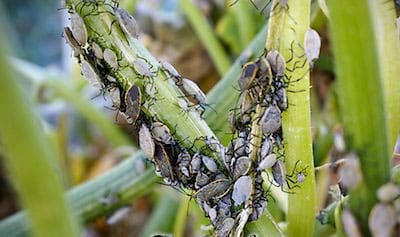
We’ve talked about how the squash bugs were wreaking havoc on our squash, zucchini and pumpkin plants in several of our Newsletters and asked our readers to talk to us and let us know their ideas and experiences in dealing with this critter that destroys otherwise healthy and productive plants overnight.
We found out that these bugs are a serious threat all across the US and Canada as well, so no area is more vulnerable or immune to them. Several people shared their experiences with companion planting, with mixed results. Some had good results, some had no change and some had differing results depending on the year. Many of you have said this is the most difficult garden pest to deal with, as it doesn’t seem to respond universally to anything or any approach. The bugs will overwinter under almost any debris, woodchips or other small shelter and re-engage their destructive behavior in the Spring, making their control a multi-year program.
The two most successful methods were spraying of Neem oil, either by itself or mixed with water, or Guinea hens in the garden. The Guinea hens seems like the most reliable method of controlling the bugs, if you’re able to get and keep the hens. They also seem to be the favorite bug controlling critter, regardless of what bugs you have. The Neem oil not only smothers the bugs, but slows their feeding and greatly reduces their reproduction if they ingest it. Several resources mentioned Neem oil as one of the foundational treatments for the squash bugs.
We were hoping for a somewhat universal approach, and one of our readers, Joann from Michigan sent us this recipe, and she says it will kill the bugs, not just drive them away! This looks to be a promising approach that will not only help with the immediate problems but speed up the decrease in population for next years program.
- 4 Tsp baking soda Anti fungal properties, also stops powdery mildew type problems
- 1 Tsp vegetable oil Smothering agent Neem oil would work well here. The amount could be doubled.
- 1 Tsp organic soap Emulsifier/sticker/smothering agent Best to use a natural soap such as Dr. Bronner’s and not a detergent that can harm the soil organisms as it sticks around much longer. The peppermint variety seems to work well from Dr. Bronner's.
- 1 to 2 Tbs garlic juice To make juice: 1 medium bulb (not clove) of garlic blended with 1 to 2 cups of water. Let sit a minimum of 15 minutes and strain.
- 1 medium onion Made into a juice concentrate as above.
- 1 Tbs dried cayenne pepper.
-
Add all ingredients together in a bottle with a screw top and shake well to mix.
-
Add concentrate to a gallon of water and spray liberally. Repeat as often as needed to drive off or kill the squash bugs.
Daily hand-picking seems to be very effective as well. Some of our readers use a battery powered vacuum to help with this chore!
Add concentrate to a gallon of water and spray liberally. Repeat as often as needed to drive off or kill the squash bugs.
We will be trying this recipe to see how it works for us. Please let us know your experiences, or if you have a different approach that has proven to be effective, please let us know so we can share it!


I use this stuff. Completely organic–is a fungus/microbe that kills squash beetles:
Bacillus thuringiensis
Thanks, Linda! I forgot about Bt. It has been so misused by the GMO companies that I had forgotten its usefulness in its basic state.
We did not find guinea hens to be helpful in our garden because they ate the buds on my peas and beans, and possibly other plants, too, but this was a while ago so I don’t recall. We use a neem oil spray and mix it with soap and equal parts water and rubbing alcohol, which does kill or at least harm the pests. I am currently making my second attempt at growing summer squash, though, because the heat kept me out of the garden and I let up on my spraying regime. Squash bugs seem worse this year, and showed up earlier, than ever before.
Wow, I really would have wished for these suggestions earlier in the season. My pumpkins have been wiped out/nullified (one heirloom, one hybrid) and not one pesticide I’d tried worked.
I won’t be trying pumpkins again, however, because the surviving ones never pollinated despite “direct intervention” and they take up too much space.
I have been infested with red bugs with black dots and legs ALL OVER my tomato plants that are in raised bed with other vegetables. Only eating leaves and vines, not tomatoes themselves. Would you recommend neem oil for those?
Yes, I think that Neem oil is a good foundational application for undesirable bugs. As one of our readers pointed out as well, Bt is also a good deterrent.
We would have had these earlier, but didn’t have quite the problems that popped up later in the season.
I would recommend not giving up entirely on pumpkins. Give it a year or so, then try a smaller type, like the New England Sugar Pie. They are physically smaller, and the vines don’t sprawl quite so much, so might be an option.
Thanks for the input on the Guinea hens, as I don’t have any experience with them.
I agree, the squash bugs seemed much worse, both in timing and population. I’m guessing it is a seasonal response to the cold wet winter we had for the past couple of years.
I have used Neem Oil with some success, but nothing seems to work on all of them.
At the beginning of the season, I thought I could pick them by hand. I do believe I was winning the war until we strawed the tomatoes which were near the squash. I lost all seven plants even though I was picking over 100 bugs a day morning and night and squashing eggs that they were producing. Then they moved to my cucumbers and killed them too.
Meanwhile in the pumpkin patch which was on the other side of the yard, my sons newly hatch baby chickens skittered through the garden fence without there moms and ate every squash bug they could find, obviously doing a much better job than me!
A friend of mine is a certified organic farmer, farming approximately 1000 acres. He gave me an ounce of something called Pyganic, the adults fell over dead on the leaves. When I looked up the price of Pyganic, my heart skipped a beat I think.
Something else I found that worked when you spray, no matter what you are spraying neem oil, soap or even water, the adults come to the top making them much easier to catch and kill if you don’t have a big garden.
I haven’t had a garden in many years and I don’t remember dealing with squash bugs when I was a kid in my father’s garden. They have certainly made raising squash a miserable experience.
Thanks so much for your invaluable information and experiences, Jacqueline! I wonder if baby chicks or at least younger chickens could be a partial answer to these monsters…
The year that I planted radishes in the late winter and then just piled dirt on top of them instead of clearing out the bed before planting my squash, that year I had no problem with squash bugs. Or cucumber beetles. I also planted nasturtiums and marigolds in the squash bed.
I didn’t do that 2010, but I’ll be doing it again this year.
Thanks for another great tip, I’ll have to try this.
Wondering about the garlic tea and if you might follow up on your experience. Read from another site that detergent could possibly harm the plant (squash) and to be sure to use real soap and was having a hard time trying to figure out where I was going to find soap…but remembered I have some peppermint and lavender soap from the natural food store…yes!!!
Tommie-
We had some success with the garlic/neem oil/soap recipe, but got into it a bit late I think, as there was a full-blown infestation going on. Be sure to use an organic soap, such as Dr. Bronner’s to not harm your plants or the soil organisms.
Hey thanks Stephen. We tried the recipe on 2 rows of squash 400 feet long and there seems to be very little activity on them although there were lots of eggs and a few small, probably just hatched, nymphs before we sprayed 8 days ago.
We did modify the recipe: per gallon, we blended a medium bulb of onion that’s too hot to eat now (stalk and all) from the garden, a tablespoon of dried cayenne pepper, used canola for oil and upped the amount to 3 tbsp, but I’m ordering neem oil for next year, but planting cayenne now and garlic come fall as the bulbs around my neighbors garden made a couple weeks ago.
Our control was a row of Zuchinni which did not get sprayed at the same time as the squash and it is heavily infested with bugs, some with 100+ bugs/plant. We are now spraying with the mix; yesterday we sprayed the zuchinni, and I could see bugs dying, but the plants (more like the bugs) need to be doused multiple times with the spray. Today the number of bugs was reduced, and we are spraying again tomorrow.
I’m thinking the recipe is good, especially for eggs already on the plant.
Do you think canola oil, or any other type of oil, can be picked up by the plant and deposited in the fruit?
I think that the oil will not be ingested by the plant, but will remain on the outside of the plant.
We found planting squash in late June or July essentially avoids squash bugs. We battle every year with early spring planting with squash bugs. Think it has been in July we replanted and never saw another squash bug. So why did we early spring plant squash again. hah! We are going to be faithful with Neem oil this year just to check it out. The winter squash has to be planted early.
Thanks for the info, it is interesting to see that timing of planting may by the easiest way to avoid these nasty critters! Please let us know how the Neem works for you this year.
Helpful information. Will be altering my mixture for treating for squash bugs. Squash bugs decimated all of our cucurbits last season… even the winter squashes except for Blue Hubbard. We have spread our cucurbits around this year and have already gotten more squash and cucumbers than we did all last season. Have lost three plants to squash bugs so far. As soon as I see the wilting and evidence of squash bugs I pull the plant up and put it way-away from the garden plantings.
Thanks, Donna! You mention the Blue Hubbard squash didn’t succumb to the squash bugs. Is that because they weren’t attacked as much, due to the season or other factors? I’m wondering if the Blue Hubbard might be somewhat resistant to those critters.
I never had a problem with squash bugs in 30 years of gardening in NY. Two summers ago, I had my first garden in AZ (Humboldt), and lost most of my squash family plants to the bugs. Last summer, I resolved to hand pick them thoroughly 2-3x a day, and to my surprise and relief had no problems with them. Every morning, mid-day and evening I went down the rows, typically finding half a dozen mature bugs every two or three plants. After my experience the previous summer, I was expecting an explosion of bugs, but apparently, keeping after them so relentlessly prevented mating and egg laying. I didn’t see a immature bug all summer. I had about 40 winter squash plants and 20 other summer squash, cuke and melon plants. It took me about 15-20 min each “patrol”. Am curious to see what happens this summer; my squash are just getting to the flowering stage.
Thanks for your experience Bart! Please keep us posted as to how this growing season turns out, we will share it with our customers.
Bacillus thuriniensis is only shown to be effective against the moth/butterfly/caterpillar order of insects Lepidoptera, not against bugs (the squash bug is in the “bug” order) or beetles (order Coleoptera). It’s important that Bt only be used against the caterpillar pests when they’re present, because otherwise using it will have an impact on wild and beneficial moths and butterflies. Bt can be such a help when it’s used correctly. Just thought I’d pipe in.
Thanks for the info, Cam!
Thanks for the ‘recipe’ and suggestions. What seems to work best for me is crop rotation, growing my zucchini in large wire cages to keep the stems/leaves off the ground and ringing the plants with radishes. I plant the radish seeds in a circle about 12″ away from the zucchini starts and just let them grow, adding a thick layer of grass clippings for mulch not only to keep down weeds and conserve moisture but to foil the bugs. A neighbor told me that squash bugs don’t like to crawl over or through a mulch; it works for me in my dry intermountain West garden.
Good to hear, Helen! Thanks for sharing your experiences, these are the types of gardening knowledge that we love to share.
I just tried a mixture of Dr Bronners Peppermint soap, neem oil and water in a spray bottle. Run the hose around the root of the squash plant and when the squash bugs come out spray them, they’re dead within 10 – 15 seconds. This killed the full size bugs as well as the younger ones.
Good to hear Jonathan, thanks! Always good to have another non-chemical method in the toolbox.
good afternoon!
i am new to gardening, planted a 12x10ft bed here in virginia beach, and totally planted wrong! the bed is overgrown and overrun and i am out of my league haha.
but i now know – thanks to this foum – that i have a horrible squash bug infestation. i got one zucchini and that’s it.
do you think, at this point, i should rip out the plant? i have cantaloupes, watermelon and tomatoes growing, and they seem to be doing ok. fruiting, but not ripening ( i planted late).
any feedback for a first timer? other than never planting watermelon and cantaloupes in the same bed!!
thanks so much!
Alix, you have found the secret to gardening – making mistakes! Don’t worry, failure isn’t fatal, and success isn’t permanent. To keep hard-won knowledge, start a garden journal and write what you’ve learned.
If the squash bugs haven’t taken over the squash plant, leave it be and use our Home Garden Bug Solution to deal with them.
We are always adding articles that work to help gardeners be more successful, so stay tuned!
I’ve had a terrible time with squash bugs. No near neighbors garden. Last year spraying eggs with Neem kept the population down. Not this year. I could grab a handful at a time. My helper planted a couple of squash plants at ground level (I garden in raised beds), and I never saw squash bugs on them. Also, a friend said marigolds effectively repelled them from her plants. I have tried radishes and nasturtiums for repellants too, both ineffective. Next year I’ll do main plantings of squash at ground level, maybe a sacrificial lamb or two in raised beds, with marigolds and see if that is effective. If not, sacrifice the lamb.
Margaret, we had them so bad that we didn’t grow any squash species for 2 years, so I know how bad they can be! We found that wood chips (which we use for our walkways) can harbor them, giving them nesting areas to lay their eggs in, which over-winter and hatch the next spring. After spraying with the recipe shown here, and starving them we haven’t had nearly as much trouble. In our situation, we’ve found that anytime a plant touches the ground it attracts bugs. We also grow in raised beds, so wanted to share our experiences.
Squash bugs! Get out the battery operated hand vacuum and suck those suckers up fast. Works good on numerous garden bugs. The vac we have came with a tool set with drills and etc that all operate on the same type of battery.
Hadn’t thought of a hand vacuum, thanks for the suggestion!
If you vacuum them with a hand-held, empty it into a bucket of hot soapy water, for they’ll just crawl out and return to your plants.
I had never seen this grey squash bug until a few years ago. I used Rotenone, then which is now not available. I’ll try your recipe with garlic.
By the way, there is another bug that comes up the stem of a squash/pumpkin plan and kills the plant from inside. Spray a soap insecticide at the base of the stem when it first comes up and again a week later. You need to get it early.
Thanks for the heads-up Lynn! Please let us know how the garlic extract works for your garden.
Great point Margaret, thanks!
4 T (tablespoons) of baking soda will READILY scald both summer and winter squash in my experience, especially if sprayed during daylight. I STRONGLY recommend to just use 4 teaspoons or less, unless you are sure the plants can take the amount the original recipe here recommends.
I used a 2 T one time recently and regretted it, as my butternut squash and some of my yellow zuccini had considerable chemical burns showing by the end of the day after I sprayed in the early evening for white powdery mildew and other fungi in my squash patch.
Thanks for the heads up on the amounts! That is one of the reasons this recipe calls for 4 Tsp (teaspoons) and not more. I hope others will heed your experience and avoid the same mistake. Thanks so much for sharing so that others can learn!
I made your recipe yesterday, with some modifications. I don’t have a blender or processor, but make-shifted my way to, possibly less potent, concentrations of onion and garlic. The modified recipe below:
2 tsp baking soda
3 tsp neem oil
<1 tsp Bronner's Sal Suds (the last drops I had)
1 med onion, fresh juice concentrate
4 tbsp garlic, fresh juice concentrate
1 1/4 tbsp cayenne, powdered
Due to suds, my mixture was a little less than a gallon, making it slightly more potent. The mixture needed a run through a coffee filter because of the cayenne powder (it clogged my sprayers), but I managed by letting it settle a few minutes before carefully pouring into a spray bottle. I sprayed last night and again this afternoon, and have used ~half the mixture on the ~10 squash/melon plants I have sharing a bed. The bugs are only attacking the squash, but I treated all surrounding plants to avoid them just moving over. Today I got to observe the effects, since last night I was in a hurry to apply the new mixture after sunset and before nightfall. The bugs were panicked, considerably less mobile in ~5-10 minutes, and completely immobile in another ~5-10 minutes. I also saw quite a few that were dead from spraying the night before. They were everywhere! I'd spray from one side/angle, and be able to move around and spray many hiding around another side/angle. After thoroughly spraying each leaf (underside and top), and chasing them around sides for an hour, I felt I made a proper impact on the herd. I noted some mild chemical burn on the squash leaves before running out the door for work, probably from the baking soda (which is why I reduced the amt) and applying in the sun, but I'll be able assess the damage more tomorrow morning. I plan to reapply before sunrise, and will keep you posted if you're interested. It's my first time growing squash, so please wish me luck!
Cheers,
Nikki
I place a small tomato cage next to a saucer of water next to the area of squash bugs. The birds come down for the water. The tomato cage give them a perch to observe the area around them and then they go after whatever food looks good. They love squash bugs.
That’s a great idea Sue! Thanks for sharing it, seems very simple and effective.
That is great news Nikki! I’m glad that the recipe worked for you, and that you found a way to modify it for your situation. Yes, please let us know how it works over time.
Not everyone may be able to use this idea because you need access to cedar wood. (At least that’s what they call it in northern Arizona. It’s actually a type of juniper.) My father has done this the last couple of years and made a major impact on the squash bugs. He makes a “tea” by soaking cedar chips in water, strains out the debris, and sprays the bugs. The “tea” needs to steep for a week or so outside in the warm sun. The longer it steeps the more potent it becomes. So far he has not seen any detrimental effect to the plants but I don’t know how it might affect other bugs. It does need to be sprayed directly on the bugs and seems to be most effective on the eggs and larvae.
Thanks for another method, Maggie!
Is the squash bug the same bug as what we here in southeast Texas call a stinkbug? They ruin my tomatoes (what the squirrels don’t get) every year. They make blister spots on the outside of the tomatoes which makes a hard knot inside. There are hundreds of the bugs. Help?
The Squash bug and stink bug are – to my knowledge – two different bugs. from the UC Integrated Pest Management page –
I have used diatamatious earth in the past which has helped a little. However, you have to check every day and pull off any squash bugs you see. I work full time and do not have time to spray and dust and squash every night. This year the bugs got my garden early, i have had three good pickings and that is it. Now my plants are decimated. I am going to clean out and start again since it is so early. Going to mix some diatamatious earth in with the soil as well this time. The battle rages ;)