Archive | Get to Know Us Better RSS feed for this section

Hand Packing Heirloom Seeds Video

Have you ever wondered what goes into the packets of heirloom seeds that you get in the mail? Those little paper envelopes have a lot of work, care, love and attention in them. We wanted to show you a little peek behind the scenes on how we pack our seeds here at Terroir Seeds.

Some people don’t know that we hand pack each and every one of our heirloom seeds packets, while others don’t understand why we don’t use a machine to pack them. To answer the second point first, the seed packing machines that are used in larger seed companies are prohibitively expensive, even when available used. They are fast, but require cleaning and recalibration to the new seed for each and every seed variety packed. In our company, this would mean we would spend about two thirds of our time cleaning and calibrating the machine and less than a third in packing seeds. It doesn’t make sense for us quite yet! And yes, we actually do hand pack each and every seed packet that we ship!

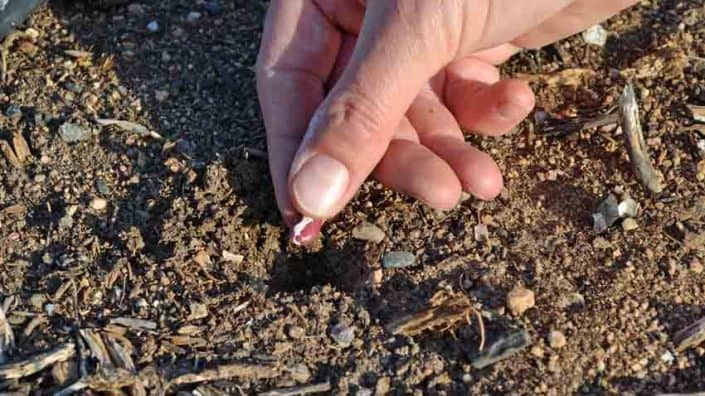
For quality control, we only work with one type of seed at a time. This avoids mix-ups, as all tomato or pepper seeds look the same! When a new batch of seed arrives for the season, we count the number of seeds that are supposed to be in each packet, then find the correct measure that will consistently give us the number we are looking for. This may mean we count the same seeds several times, to make sure we are putting the correct number in a packet. We try to err on the generous side. Sometimes that is the same measure as the year before, but not always. Differing weather conditions, nutrient availability, pest and disease pressures all play a part on the physical size of the seeds from year to year.

As you probably imagine, this part of our business is very important to our continued growth. It is a detail oriented, behind-the-scenes type of job that requires high levels of concentration. With our growth, keeping up with the seed packing is requiring more time and will soon be a full time job.

We hope you enjoy the video and learn a bit more about why we put so much effort and love into our seeds!

Comments { 1 }

Caretakers of the Seeds

Caretakers of the Seeds

Caretakers of the Seeds

We do not own the seeds we sell; we are simply caretakers of the seedstock, maintaining genetic purity, quality and viability while they are in our care. These seeds – all of them – belong to humanity. They are what have kept us alive for the past 12,000 to 15,000 years once the human race transitioned from hunter-gatherers into a more agricultural society, growing and saving the seeds from year to year, putting aside the very best seeds for planting the next year.

It is impossible to our way of thinking for anyone to “own” or “patent” seeds, as they are the very lifeblood of our race.

This is our full-time job as well as our consuming passion, not just a passing fancy or whimsical interest. This, our life’s calling, demands every bit of education, experience, creativity, energy and enthusiasm that we have. Everyday. We see, looking back, that every single thing that we’ve done in our life has led us up to this point and has been a preparation for this work that has selected us.

We have come to realize that the more knowledge and experience that we gain, the more that have yet to gain. Our road ahead is full of learning and we welcome that. We are eternally grateful for the mentors that have most graciously taken us under their wing, educating us and showing us the best possible ways to move forward with moral and ethical integrity, as well as seed purity, vitality and quality. Thank you ever so much! We are in your debt.

There are those who want to put seed companies out of business, advocating for everyone to save their own seeds and maintain their own seed banks and seedstocks. This is a noble proposition, but we don’t believe it to be feasible. We have almost 20 years of growing and soil building knowledge and experience behind us, yet we feel in so many ways that we are just beginning our journey into deeper knowledge. This is our commitment, to bringing out the best varieties and maintaining the highest quality of seeds and it takes all of our time and then some. We don’t see everyone as being interested or able to make this commitment over the long term. This is one of the main reasons why viable, family owned and run seed companies are so critically important today. It is human scale agriculture in the purest form, at the very beginning of the cycle of food.

We see diversified, decentralized and local human scale agriculture as being the answer to how we are going to feed ourselves in the long term. It starts with the absolute best seeds possible, which is in turn made possible by individual seed companies that have a commitment and passion to constant, careful observation and maintenance of the highest quality seeds, correcting genetic drift, anomalies and other problems as they arise in partnerships with highly dedicated and experienced seed growers who are experts in their fields.

This doesn’t and can’t happen overnight or in a short time frame; it takes years and years. We are often looking 3 – 5 years into the future in order to introduce a new variety of seed from the time it arrives in our hands. We do the initial evaluation grow-out, and if we like it one of our growers will do another grow-out for observation of any variability, drift or evidence of possible cross breeding. The subsequent grow-outs ensure that each new generation is growing true to the previous one and the established standard for that variety. Each grow-out requires a full season. If there are problems, they are evaluated to see what is required to correct them, and if it is worth the time or if it would be better to start with another variety that looks more promising. After the evaluations the production grow-out begins taking place. This in itself may take 2 or more years, depending on how much seed we have to start with. Some seed production takes 3 or more years just to reach a genetically viable starting population. From there the seed production growing takes place, and we can offer that seed variety for sale.

This level of dedication is labor and resource intensive, one of the reasons that diverse family seed companies are needed to provide the quality of seed we need to grow our food. Individual gardeners can participate in saving and preserving seeds and diversity as well, learning to save a smaller number of particularly tasty varieties on a smaller scale. We strongly encourage everyone to try saving at least a small portion of their seeds. It is a wonderful education into the miracle that is seed, along with the irrepressible adaptability of the seed. The humble strength of life is clearly shown each spring when moist warm soil breaks the dormancy of a seed, giving it another chance to express its full genetic encoding and potential. As with gardening, saving seeds will make you a better observer, a better gardener and a better steward of your part of the earth.

We feel that it is through a collaborative effort between small family run seed companies, seed saving exchanges and dedicated individual gardeners that the strength of the seed future is the strongest. Independent, decentralized yet cooperative seed production and distribution is the most robust and resilient model that offers the best protection against the loss of seed varieties to a patent or consolidation effort.

Comments { 2 }

Help Build a Better World

Build a Better WorldWe need to build a better world, you and I. There has never been more of a need than there is today. There has also never been a better time. There is an old saying, “The best time to plant a tree was 20 years ago. The second best time is today.”

A better world where our lives make sense, where we stop working longer hours in jobs we detest to buy things that fill our homes but don’t and can’t make us happy. Where we realize that we – not things and not money – make ourselves and each other happy. Our lives are better when we work with others, helping them while helping ourselves at the same time. A world where what we do engages us and what we love, and that work fulfills us and gives us and the world meaning. Where both parties in each and every transaction benefit, and the first thought isn’t “what profit is there for me?” and the dollar isn’t the sole measure of benefit, profit and satisfaction.

There are many critical systems that are in decline or are breaking, but do not give up. Depending on where you look and what you read the world is on the brink of catastrophic collapse in many areas; finance, food, energy, water and populations are all at risk. There are dire predictions of dark and difficult times ahead, but do not give up.

These circumstances are precisely why you and I must build a better world. We must begin today. Very few people have a positive outlook for the next 5 to 10 years, but we can change that. When questioned, those same people give the reason for their pessimistic outlook as due to the state of the world and to circumstances created by governments and corporations. In other words, they are afraid of external circumstances beyond their control.

We start building a better world by realizing, recognizing and taking responsibility for the only thing that we truly have control over in our lives – our choices. We always have the power of choice. We constantly choose, for better or for worse. Several hundred times a day we make a choice. Our choices affect not only us, but those around us and multitudes of others we will never meet. There are those that say that one person cannot make a difference. This is untrue. One person, alone, will have a difficult time making a difference. However, we are very rarely truly alone – especially in our choices. Our lives are the direct results of our choices, made throughout the years that have lead us to this place in time where we are today. Who we are, what our character is, what we do in life, where we live are all the results of choices we have made.

Our most powerful choice to build a better world may be one that we make with little thought every day. Our choice of how and what to spend our money on is one of those paradoxes that goes largely unnoticed and unexamined in our lives. Both Joel Salatin and Michael Pollan have said that we vote with our forks three times a day. Many of us have heard the “Buy local” and “Know your farmer” mantra, but what does that mean?

What it really comes down to is taking the responsibility of who you support with your dollars. Every time you make a purchase, you are financially helping that company, along with endorsing the way it does business. For better or worse, this is what happens. Do you love the eggs, greens and tomatoes from the young farmer at the Saturday Farmer’s market? Wonderful! Buy them and you directly help that company stay in business and grow. Are you upset at how many jobs have been sent to China, and the newly introduced GMO sweet corn in Wal-Mart? Good! Do you buy anything from them? If so, despite your disagreement, you are helping them to stay in business and grow. It really is that simple.

Realize, though, that simple almost never means easy. It can be tough to make good choices. This is one of the reasons we are so passionate about small business and human scale living. Our individual purchases means very little to a large international corporation, but means a lot to a small family owned farm or business. There is a quote that sums this up nicely –

“When you buy from a small mom or pop business, you are not helping a CEO buy a third vacation home.

You are helping a little girl get dance lessons, a little boy get his team jersey, a mom or dad put food on the table, a family pay a mortgage, or a student pay for college.

Our customers are our shareholders and they are the ones we strive to make happy. “

This can seem daunting at first. There are so many choices about so many things that we don’t want to get wrong, we don’t know where to start. There is also so much negativity around, it can seem to be simply too much. Start small, start by focusing on and emphasizing the positive choices that we can make today. We won’t build a better world by getting rid of the negatives; we will build it by focusing on and increasing the positives. When more of a positive nature is added to a system, it will naturally and automatically become better as the positive displaces the negative. What we focus on – positive or negative – think about, talk about and act on will grow. Help grow the good in our lives. Find good, positive ideas, thoughts and directions, and then incorporate them into your life. It takes some work to concentrate on the good and beneficial, but once those habits are started they will continue to help.

Do not make the mistake of thinking that you cannot make a difference. Never underestimate the power of change inherent in a small effort, movement or idea. Committed people make the difference on a large and small scale every day. As the famous quote from Margaret Mead goes -

“Never underestimate the power of a small group of committed people to change the world. In fact, it is the only thing that ever has.”

Start by finding and working on what you can do, not what can’t be done. Build a better life, starting with your life. Plant a garden at home, no matter how small. Container gardens are great, they are simple to set up and use and can grow some good food. Help out at the community garden, with or without a plot of your own. Share your veggies with a neighbor, family or friends. Help out at the food bank, Meals on Wheels, or your local soup kitchen with donated veggies or your time.

Be on the lookout for opportunities to enrich and improve your life. Stop thinking about the dollar value in each opportunity, and make the decision to take it or not based on how much positive or good it will bring to your life and others. Read more. Read to learn and not just for entertainment. Study your environment and habitat where you live. Get to know what grows wild there. Find out what is edible and what is not. Learn what edibles will grow well with little care and plant some. Start a food forest in your yard or neighborhood and share with those around you. Make a point of getting to know someone new at the Farmer’s market, or going to the Farmer’s market if you don’t already go. Learn what is made in your community or town. You might be surprised at what you don’t know about where you live. Once you start getting to know more about where you live, you just might find that you like it more than you initially thought.

These are some of the ways you and I can build a better world. We can start today.

Comments { 12 }

Growing Milkweed for the Monarch Butterfly

Milkweed – Monarch Butterflies Food Source

Milkweed Plug

Milkweed Plug

As a small family owned heirloom seed company, we receive many requests for partnerships with or donations to some great causes. Some of these are exceptional, as when the Xerces Society contacted us this past January about growing a specific species of milkweed that is native to our part of central Arizona. Pollinators and pollinator attractants are very important to the success of any garden, so we jumped at the chance to connect the right people who share our passion for this project. Here is how that story unfolds!

Monarch butterflies have seen steady population declines across their native range since population monitoring first began in 1976. Several 2012 reports show that Monarch numbers will drop almost 30 percent this year, continuing a decline that has lasted for the past decade. The severe drought seen across Texas and Northern Mexico, combined with wildfires across the entire southwest has been a large factor. The biggest contributor is simply the loss of land that supports the Monarch’s food source and hatchery – the Milkweed plant. Much of the land has been converted to commercial herbicide tolerant corn and soybean production, or developed into housing. Overuse of persistent chemical herbicides and roadside mowing for weed control has also created loss of milkweed habitat and thus reduced Monarch numbers.

Monarch Butterfly on Milkweed

Monarch Butterfly on Milkweed

The milkweed plant (Asclepias spp.) plays a critical role in the monarch life cycle. Each spring Monarchs move across the United States, laying eggs on native milkweeds, the only plants that serve as food for newly hatched monarch caterpillars. Because of their migratory life cycle—breeding in the United States and Canada, and overwintering at only a few locations in Mexico and California—the most effective conservation strategies for Monarch butterflies are those that protect and restore habitat across their entire range. As a result, the North American Monarch Conservation Plan recommends planting native milkweed species to restore habitat within the Monarch butterfly’s breeding range.

The Xerces Society is working to increase the availability of native milkweed seed and encourage restoration using milkweed in California, the Great Basin, the Southwest, Texas, and Florida. These are important areas of the Monarch’s spring and summer breeding range where few commercial sources of native milkweed seed currently exist. To conduct the project, they are partnering with the Monarch Joint Venture, a coalition of federal and state agencies, scientists, and nonprofit conservation organizations.

Brianna Borders and Cindy Scott with Milkweed plugs

Brianna Borders and Cindy Scott with Milkweed plugs

At the end of this past January, we were contacted by Brianna Borders, Plant Ecologist for The Xerces Society about a possible project to propagate a subspecies of Milkweed – Asclepias asperula that is native to Arizona. She had about 2 ounces of seed (approximately 7,000 seeds) that had been collected in the southern portion of our local county by the Desert Botanical Garden volunteers in Phoenix. Through grant funding, a California native plant nursery could propagate the seeds into plugs ready for planting. The Xerces Society was looking for a grower in our area that could bring the project into being. This would be a minimum 2 year project to grow a commercial quantity of seed to offer for sale.

Spreading Mulch for Milkweed plugs

Spreading Mulch for Milkweed plugs

After some thought, we decided that Fiona Reid was the perfect fit for this project. Recently retired as Education Director from a natural history education center, she was already growing and saving milkweed seeds at her property – Painted Lady Vineyard! One of her passions is native plants of the area, with an emphasis on butterfly attractants, and has solid connections with the Arizona Native Plant Society, as well as the Desert Botanical Garden in Phoenix. The Painted Lady is a beautiful, ephemeral butterfly that happened to visit the vineyard in droves as the initial vines were being planted, thus the name for the vineyard came about.

Drilling Holes for Milkweed Plugs

Drilling Holes for Milkweed Plugs

The planting took place over a long and extremely hot weekend in the middle of June after much work over many weeks not only by Fiona but her volunteer crew to prepare the ground to receive the fragile tiny plugs that had arrived overnight in flats from the grower in California. We took part in the planting, but what really inspired, amazed and humbled us was the outpouring of community support from all walks of life and all interests in this project that will only benefit the Monarch butterfly. There are no financial rewards for any of the volunteers for the hours spent bent over in 100 degree heat planting over 2,000 fragile plugs. Many of the people helping were native plant enthusiasts, some were butterfly lovers, but a significant number had no real interest besides that of helping see a project to fruition on nothing more than the basis of it is the right thing to do.

Planting Milkweed is a Team Effort

Planting Milkweed is a Team Effort

We received this email from Fiona on Monday after the planting weekend. When we left Saturday evening, a little over half of the plugs were planted. There was some concern of getting the rest planted with the remaining group and the high heat creating a deadline of viability for the milkweed plugs.

“Monday morning, after a pretty blazing hot weekend, and the little plants – ALL of them – are sitting in the ground, protected by mulch, and getting the necessary drink of water. Mission accomplished!

320 hours of volunteer labor, not even counting mine, to get this job done from start to finish. It has been an amazing community effort and I have had the pleasure of working with a great group of people, children included. As we began to close in on the finish yesterday, and everyone was hot and very dusty and sometimes muddy, I was almost overcome by the understanding that people don’t have to involve themselves in such hard work – sometimes backbreaking work, sometimes knee-breaking work, and always hot work. They could sit at home in the cool, or an office somewhere, and do good for someone else. But none of you did that. You came knowing it was going to be outside in the heat; knowing you would kneel and bend; knowing you would get dust in your nose and eyes; knowing that – as Rachel Carson said – “there is something beyond the bounds of our human existence” that matters. You also know that you won’t get any thanks from the butterflies that find all the little milkweed gardens that will eventually grow from this project. I do know, from the simple fact that you involved yourselves in this effort, that you will one day spot a monarch butterfly and in that fleeting moment there will be a part of your soul that stirs and feels absolute content. There is something right with the world – it may be ephemeral, and maybe you can’t articulate what it is, but that moment is enough for us.

I don’t think we will get a harvest this year at all. Next year we will have to put our heads together to figure out how we take the next step – collection of the seed. In the meantime I hope you can pat yourselves on the back for a fantastic job, so well done. I cannot thank you enough.”

Planting Milkweed Plugs

Planting Milkweed Plugs

Here’s Fiona’s update on the project after the Monsoon rains have begun:

It’s what we have all been waiting for – the rains! Right now, as I look through my office window, there are heavy raindrops exploding like little bombs on the driveway, and I know they are doing just the same over the new milkweed fields less than a hundred yards away. Perhaps I should take this very opportunity to celebrate these first rains of the monsoon season and take off all my clothes and run over there and be like a little milkweed, totally open to the elements!

Almost Half Way!

Almost Half Way!

2,190 milkweed plugs, grown from seed in a California greenhouse, are now at home in our native Skull Valley soil, barely 50 miles from their parent plants. And their roots are now moving out from the plug of soil which has been their ‘nest’ for so many months into the earth around them. These rains have showered them with nitrogen and freshness and their narrow leaves are pushing up towards the currently cloud covered sky. So I can pat myself on the back for a job well done, right? But nothing like this can happen without the help of others, so they all need a pat on the back as well.

Busy Hands

Busy Hands

Community and connections make good things happen. Stephen and Cindy needed to think of me for this project; I needed Jodi Padgett, with whom I share life and land, to agree with the idea that we could plant the milkweed on the property; I needed to find someone to plough and level the planting areas; I needed volunteer help almost every step of the way. I needed Brianna Borders of the Xerces Society to support me when needed. Food and wine is usually a great incentive for volunteers, but that’s not all – realizing that there is, as Rachel Carson said, “something beyond the bounds of our human existence” worth paying attention to is probably more of an incentive for every single one of the volunteers who came and knelt, and dug, and laid weed barrier fabric, and connected irrigation parts, and invented hole-burners and augers, and finally, tenderly, popped these little milkweed plugs into the earth with a silent prayer that each one would grow strong. All of this work was done in unusually hot weather. The youngsters took much needed breaks by splashing around in the swimming pool; the elders sat in the shade gulping down iced mint tea. Everyone got hot, sweaty and very dusty.

More Busy Hands

More Busy Hands

And for the past month, as hot dry weather has continued to dominate our local area, I began and ended each day by watering those four blocks of milkweed. Today the rains did the watering for me, and moments ago, (fully clothed) I wandered around the blocks and, yes, all of a sudden it seems that these small plants have decided this is a good place to be and have sent their roots out into the native soil and are prepared to call this place ‘home’.

We don’t get paid dollars for doing this. What we get is priceless. One day, in many gardens around this area and scattered throughout the southwest, the most ephemeral of creatures – a butterfly – will lay her eggs on the milkweed that has been grown there especially for her, and the stunning caterpillar that emerges will have all the nourishment it needs right there. Soon thereafter, through the miracle of metamorphosis, a monarch butterfly will continue the northward journey. We may only get a fleeting glimpse of this whole cycle, but that’s OK – we just need, it seems, to know that we are part of a bigger whole that is life on earth.

Comments { 3 }

2012 Slow Food Terra Madre

Slow Food is Good, Clean and Fair

Slow Food

Slow Food

We are honored to have been selected as US delegates to the 2012 Slow Food Terra Madre in Turin, Italy October 25-29. There are only 200 Delegates chosen from across the country to represent Slow Food USA. This is a very unique and advantageous opportunity for us as a small heirloom seed company to attend while creating and strengthening connections with producers around the world. This event will help to further our work of preserving and promoting heirloom seeds, home gardening and sustainable, local food networks.

Since 2004 Turin, Italy hosts this international event every two years in the northwest Piedmont area. Slow Food is an international grassroots membership organization promoting good, clean and fair food for all. Terra Madre is a network of people who actively work to preserve and promote sustainable farming that respects nature, traditions and communities.

During this trip we plan to meet and make friends with food producers around the world and learn from their experiences while sharing ours. The synergy of a group of committed people with a common goal and interest can make incredible change in the world. Now more than ever we need this change on both a global and local level. Bringing back stories of successes and challenges can help make changes in all of our communities. We have a unique position of interacting not only with our local community but a customer base that expands across North America and many countries, giving us the ability to share our experiences at Slow Food Terra Madre with a very diverse audience. The time is right for us to gain a larger view of the global food system by participating first hand in such a unique event.

The Slow Food organization is an ironic way of saying “No” to fast food and a fast, superficial life. Slow Food means living a deep, meaningful life; beginning at the table. It was founded to counter the disappearance of local food traditions and people’s dwindling interest in the food they eat, where it comes from, how it tastes and how our daily food choices affect the rest of the world.

It has been said that the best revenge is living well. It really starts with eating well, as eating is such a central part of all of our lives whether we consciously realize it or not. Not only is food the third most important ingredient for life behind air and water, but every civilization and culture throughout history has shaped and been shaped by its food traditions. Slow Food is simply reconnecting with those roots in today’s world by opposing the industrial standardization of taste and culture, and the unrestrained power of the food industry and industrial agriculture.

“Slow Food unites the pleasure of food with responsibility, sustainability and harmony with nature.” – Carlo Petrini, founder of Slow Food

The tenants of Slow Food are Good, Clean and Fair. Good simply means a fresh and flavorful seasonal diet that satisfies the senses and is part of our local culture. Clean designates food production and consumption that does not harm the environment, animal welfare or our health. Fair is accessible pricing for consumers and fair conditions and pay for small-scale producers. Farmers Markets, Community Supported Agriculture, local food swaps, community gardens, neighborhood gardens and over the fence backyard garden food trading are all examples of the ideals outlined above.

Terra Madre arose out of Slow Food and is made up of small farmers, producers, cooks, academics, consumers, non-government organizations and youth who come together to discuss how to improve the food system collaboratively at global, regional and local meetings. The many resulting projects and exchanges promote the sharing of knowledge and best practice approaches around the world.

The first world meeting of Terra Madre was in 2004 in Italy and brought together 5,000 producers from 130 countries. The second in 2006 included 1,000 chefs, aware of their important role in supporting local, quality production, as well as 400 researchers and academics seeking to bridge the theory of their work with hands-on knowledge. In 2008, 1,000 young producers, chefs, students and activists from around the world joined the network to show their commitment to ensuring traditions and agricultural wisdom is handed from one generation to the next.

“Foods that Change the World” is this year’s theme. For the first time the Salone del Gusto and Terra Madre will be a combined event and open to the public, not just Slow Food members. In years past the Salone del Gusto was the venue where foods and products from around the world were showcased while Terra Madre housed the discussions on successes and challenges of food producers everywhere. This year they are combined, making it the most important event solely dedicated to food, responsibility and respect for those who produce it and the environment.

“Salone del Gusto and Terra Madre 2012 will represent a defining moment for the thousands of people that will come together in Turin to discuss the future of food,” said Slow Food president Carlo Petrini. “Our daily choices and the food that we put on our plates determine the future of the environment, economy and society, and it is more crucial than ever that we raise a collective voice this October and become an active part in solving the problems that are affecting the earth and the global community.”

To make this trip a success, we are asking for your support. As 2 of 200 US Delegates we are responsible for travel to and from Turin, Italy. The costs of international air travel have increased greatly in the past year, and we are seeking support to help cover these costs to attend. 100% of contributions will go directly to travel expenses. This is a very unique opportunity for us as a small family owned company; however the costs are significant. We ask for your support in any amount that you can contribute, as everything will make a difference! Many of you have commented that the work we are doing is significant and important, so please pass this along to your friends, family and neighbors that are interested in preserving heirloom seeds and strengthening local, sustainable food networks.

To contribute, please visit our Slow Food Terra Madre link in our store!

Comments { 0 }

Home Gardening As Therapy

Old School Gardening Therapy

Old School Gardening Therapy

Home gardening can be one of the best therapeutic activities available. If you approach the process and activity from the viewpoint of mindfulness, and really pay attention to what is directly in front of you, the mind has the opportunity to relax and stop worrying about all of the little daily concerns. It will stop trying to herd the cats, untangle the knots and wind the ball of yarn. Home gardening will give you a fresh, relaxed and rejuvenated feeling. It has long been known by pre-med students and those in residency that there needs to be a balance between the mental activity in which so many of us are engaged and the physical activity that we have lost for the most part. This is why when there is only a couple of hours of sleep in front of them before starting their next set of rounds, they will play a short round of basketball, take a 10 minute run or something similar. It puts the mind on the back burner and gives it a little peace while the body gets some attention. Both parts of the equation benefit.

Something as simple as weeding can be hugely beneficial. The activity itself does not require much thought, just a wakeful mind that is paying attention to and is engaged in the process. Looking for and identifying emerging weeds from the young seedlings, finding out how deep the roots go and how much soil is attached to them, as well as how to remove the weeds without disturbing the tender seedlings are all things that do not require a high level of intelligence, but demand the full attention and presence of the gardener. The same goes for rolling the paper pots and filling them with seed starting mix, then placing them in the seed starting tray and planting each seed by hand. Not mentally challenging by any stretch of the imagination, however there are some powerful forces at work here. You gain an intimate understanding of how things are inter-related and how the parts of the garden work. In home gardening you are starting the eternal cycle of life all over once again by planting seed and making one of the most elemental connections with it at the same time. There can be something very Zen-like in gardening, no matter what the activity. You only need to “Be Here Now” as the Zen practitioners say. This is one of the major reasons that gardening was looked at by both Eastern and Western traditions as a contemplative activity, especially in the monasteries. The daily ritual of checking on the plants, watering them and tending to them is a strong one, giving a natural break from the daily work life and easing the transition into the home life. It is a few minutes of peace and stillness and harmony before beginning the next direction of the day.

There is a concept of active meditation or “meditation in motion” that is described as an activity that requires full attention and concentration without needing much cognitive thought. Rock climbing, trail running, mountain biking, riding a horse on a trail and various forms of exercise are great examples of active meditation. You are forced to put the cognitive mind on hold for a bit and focus on what it right in front of you. Gardening can be an active meditation as well, depending on how it is approached. If you look forward to the time spent in the garden instead of as a “chore” or something that must get done, then you can experience the positive benefits on offer. Gardening has the added benefit of being less intense than many other forms of active meditation, so hitting the pause button is more of a choice than an absolute necessity. Many great leaders and thinkers throughout history have used the garden setting, especially in early morning, as the ideal stage to find both intuitive and meditative advances as well as consciously and cognitively working on and untangling seemingly intractable problems that they were facing. It is a bit uncanny to find how well this works, and it is rather easy. Simply walking slowly along the beds and paying attention to as much as you can will provide you with a constantly unfolding education into how things work together in the garden, as well as glimpses of incredible beauty on a ridiculously regular schedule. Heavier work such as broad-forking a bed will intimately show the structure of the soil- how loose it is, the colors and aromas revealed with the movement of the fork, and hard spots announce themselves abruptly. You get to know the soil on a much more detailed level than ever possible with a gas powered tiller with it’s noise and fumes.

The garden can become a small steady place of solace in these times of our always-on, instant response world where really knowing someone or something can be hard to achieve.

Comments { 14 }

Where Did My Favorite Heirloom Seeds Go?

My Favorite Heirloom SeedsWe often get phone calls and emails concerning a customer’s favorite variety of heirloom seed and why it is not offered on the website or catalog this year. There are several reasons that items come and go. Some will be back in a year or two, while unfortunately, others will probably not return.

Every variety that we offer is grown for us and undergoes a lot of scrutiny, inspection and quality selection. Established standards are reviewed for each variety to ensure that the crop is growing true to type, both in physical characteristics and fruit production. We look at many more things than just the fruit production, however. Other characteristics such as germination time, leaf shape, blossom color and appearance, specific fruit shape, color and of course flavor all play a part in the selection process. If a variety does not meet our standards, it is pulled and put into the selection process, meaning it will be grown out and selected for the physical characteristics, traits, and flavors that distinguish that particular heirloom variety. This selection process can take anywhere from 2 to 10 years. If it is determined that the selection process will take too long or does not have a good chance of success, a new source of seed is needed.

Other varieties require a multiple year grow out period to produce seed, such as the brassicas like cabbage, kale, broccoli and Brussels sprouts. The coconut geranium is very labor intensive to clean, as the seed is difficult to separate from the pod. Another example is the Cherokee Sweet Mint, which has been grown out for 2 1/2 years now. It has taken this long to produce a very small commercial quantity of seed for sale.

Something else we examine is sales history. If a variety is not a good seller, with a low sales volume, we may remove the item for a year or so and then reintroduce it. It is extremely difficult to keep fresh seed stock for such low volumes, as it is hard for growers to produce genetically viable seed in very small quantities, especially tomatoes and peppers. To prevent a genetic bottleneck, and the loss of desirable characteristics, a minimum population of a variety must be planted.

Some items just don’t meet our quality standards, or we find that they have too much genetic drift to enable a successful selection process in less than 10 years. In these cases we will usually try to find a variety with similar traits and characteristics to replace it.

When we remove an item or a variety, we try to replace them with new offerings. Sometimes we offer similar, but different varieties. Other times we will offer a new, never offered variety such as cauliflower. We’re constantly searching to find and offer really unique items not seen elsewhere, such as licorice. Some of the hard to find items that we do find are a bit more challenging to grow from seed, but with some patience can be done. A couple of examples are rosemary and lavender. Both of these have low germination rates, and a long germination period. The scent and flavor are well worth the time and effort required to grow them from seed!

A different example is corn, which is becoming increasingly hard to find due to GMO and hybrid contamination or cross pollination. We’re working with several different sources of heirloom, Open-pollinated corn to ensure a healthy, viable seed stock.

A few final reasons that we may not offer seed from year to year are crop failures, not enough seed produced to be able to sell, or damage to seed after harvesting or in shipment.
As you can see, there are many different reasons that an heirloom seed variety doesn’t reappear in the catalog or web site for the next year. We would rather remove the seed from sale then offer an older, out of date, lesser quality seed. This way you are assured of the highest quality, freshest seed possible.

Comments { 0 }

Complimentary Heirloom Seeds with Your Order

Complimentary Heirloom Seed

Get Your Heirloom Seed

We are bringing back an old Underwood Gardens favorite- Free Heirloom Seeds! This is a program that was very popular several years ago, and we’re happy to be able to bring it back. Here’s how it works-

As a “THANK YOU” for doing business with us, we are offering FREE SEEDS with every $20 order total (pre-shipping costs). Unfortunately, we cannot include the cost of shipping in qualifying for free seed…

For a merchandise total of $20, you will receive one free packet of seeds (our choice).

For a merchandise total of $40, you will received two free packets of seeds (our choice).

For a merchandise total of $60, you will received three free packets of seeds (our choice), etc. up to a $100 order.

Here’s the fine print- there is an upper limit of 5 free packets, which equates to a $15 bonus on that $100 order. Seems like a pretty good bonus!

Your invoice will show the number of packets of complimentary seed, and the seed packets will be marked also. This isn’t last years old seed, but fresh and not available any other way – our surprise gift to you!

Tax, memberships and shipping/handling charges are NOT included in qualifying for free seed.

Comments { 4 }

What Are Heirloom Seeds?

Handful of SeedHeirloom seeds, heirloom vegetables and heirloom gardening are becoming increasingly popular today. Many people are turning or returning to home gardening for a variety of reasons, and heirloom seeds figure prominently. Some of these include an interest in fresh, local and healthy foods, others need to stretch the family food budget, some need additional exercise – preferably outdoors, and still others are searching for the lost flavors of the family garden when they were growing up.

All of this interest has created some confusion as to what an heirloom seed truly is. Some think that the term “heirloom” is the same as “organic”. Other folks think that anything that is not organic or heirloom means that it is GMO. To make matters worse, some larger seed companies sell both heirloom and hybrid seeds that are certified organic, further confusing the matter.

Let’s take a look at a few definitions so we can better understand what an heirloom seed is compared to a hybrid or genetically modified seed.

An heirloom is anything of value (though not necessarily economic) to a person, family or group passed down from one generation to other. Examples are furniture, China, silver or seeds. An heirloom is generally considered something worth passing down. An heirloom seed, therefore, is seed from a plant that has been passed from one generation to another, carefully grown and saved because it is considered valuable. The value could lie in its flavor, productivity, hardiness or adaptability. Many heirlooms have been grown, saved and passed down for more than 100 years. Some have history reaching back 300 years or more. To have been saved and preserved for so long, these seed varieties have shown their value to many people and families for an extremely long time.

Most heirlooms have been saved and selected because they have the best flavor and production in home and small market gardens. We get the benefit of this long development cycle, as only the best producing, most flavorful, most memorable and most dependable varieties have made the selection throughout the years. Delicate, weak or fickle varieties are no longer with us.

Open-pollinated is another term sometimes used interchangeably with heirloom. They do not mean the same thing, as an open pollinated seed is simply a variety where the seed can be harvested from the plant, saved, replanted, and the same variety will re grow year after year. This is how we have the heirloom varieties that we have today is because they are open-pollinated. All heirloom seeds are open pollinated, but not all open pollinated seeds are heirloom, as there are new open pollinated varieties being introduced that are obviously not old enough to be considered heirlooms. An example of this is the Oregon Spring tomato developed by Dr. Baggett, Oregon State University through traditional plant breeding for early germination and productivity in the cool Oregon spring.

Organic certification is the process of certifying a crop grown to a strict uniform set of standards. The certification process includes inspections of farm fields and processing facilities, detailed record keeping and periodic testing of soil and water to ensure that growers and handlers are meeting the standards which have been set. The USDA sets the standards, and the criteria for meeting those standards. The certifying agency such as Oregon Tilth, CCOF, QAI and OCAI verifies that the grower is meeting the standards set by the USDA. In short, “organic” means only that a crop was grown to a specific set of standards.

A hybrid seed is produced by artificially cross pollinating two genetically different plants of the same species, such as two different tomatoes or two varieties of corn. The cross pollination is done by hand, and a seed that is saved will not grow true to either parent. Thus the farmer or gardener has no choice but to purchase new seed each year. Hybrids are typically bred for commercial use and profit to change the characteristic of the resulting plants, such as higher yield, greater uniformity, more even ripening, improved color and disease resistance. Flavor has only recently begun to be addressed when selecting characteristics for new hybrids.

Hybrids originated in the 1920s and 1930s for small local commercial growers who shipped their produce less than 50 miles to market, and needed more consistent production for a steady supply of fresh produce to the markets. Taste and freshness were still important than, as many people living in the city were recent transplants from the country, and still remembered what fresh produce tasted like. This is completely different from the hybrids of today with the selected characteristics that have resulted in the iconic colorful yet flavorless supermarket tomato that looks and tastes the same year round.

Genetically Modified Organisms or GMO seed have been altered using DNA from completely different species and organisms to give different traits such as resistance to herbicides and acceptance of chemical fertilizers. Some GMO corn, for instance, manufactures its own herbicide in its root structure. Some DNA donors have come from fish, frogs and bacteria. The major crops that are genetically modified are corn, cotton, soybeans and wheat. Sugar beets and alfalfa have recently been deregulated, and potatoes are being studied. Most common garden vegetables are not yet genetically modified simply because the financial return in the market is not present yet.

Two of the better known benefits of heirloom seed include adaptability and flavor. Some varieties of heirloom tomato have been known to adapt to a specific location within as little as 2 to 3 growing seasons, showing better vigor, better production, better flavor and increase disease resistance. This is a result of saving the seed and replanting it year to year. Many people come to heirlooms in search of flavors that they experienced as a child. One of the leading characteristics of heirloom varieties is defined by the depth of flavor that they produce. This single characteristic has been one of the major reasons for the preservation of specific varieties over great spans of time. This is probably one of the biggest reasons for the resurgence of heirlooms in home gardens in the past 10 years, as once people experience the amazing range and depths of flavors that heirlooms offer, they are hooked. Taste is once again becoming a viable characteristic in variety selection for the home garden instead of only production quantity, uniformity, and disease resistance.

People are celebrating the fact that taste trumps volume. It’s the classic quantity vs. quality conundrum, with quality making a comeback.

Comments { 25 }

The Tale of Two Seeds- Heirloom vs Hybrid Seed Production

Two of the most important ingredients in growing food are healthy, fertile soil and good quality seed. As gardeners and growers, there is often an arc in the quality of both that directly corresponds to the arc of knowledge and experience of the grower. At first, most home gardeners will start out buying seeds from almost anywhere, without the realization that all seeds are not the same in terms of quality, but also germination and vigor in production. As time goes on, experience and knowledge are earned, and the grower becomes increasingly particular in selecting the seeds that they want to grow from. They usually get to know a company and the performance of their seeds, either through a friend or by experience. We all know the definition of experience, right? Experience is what you get when you don’t get what you want!

This is a type of question that we receive a lot- how are your seeds grown? are they organic? are they well-suited to my climate? do you grow your own seeds, or buy them? Most of the time, the real question is- What is the quality and performance of your seeds? How do I know that I am getting the best possible quality at a reasonable price? Most gardeners and growers that have some years of growing behind them realize that the best, “guaranteed lowest” price is often not at all. Paying $2.00 for a packet of seeds vs. $3.50  a packet may seem like a good deal, but there is more than just the price that must be looked at. If that $2.00 packet has 10-15 seeds and the $3.50 one has 45 seeds for a tomato or pepper, and knowing that high quality tomato seeds will last at least 2-3 years in good storage conditions, then the “more expensive” packet is a much better buy, as it is half the price, when comparing equal amounts of seeds. Or when comparing prices, there are 2 to 3 times more seeds at the same cost. Plant what you need this year, share some with friends and neighbors and you’ll still have enough to plant with next year, maybe the year after that. This is good economy. Long ago, Cindy and I realized that we would never be wealthy enough to afford to buy cheap quality. Let me elaborate. Boots that cost twice as much new, but will last 3 times as long and can then be rebuilt for another service life is money well spent, over saving some dollars today, but being forced to buy the same boots 3-5 times over the same time period. Another benefit of quality is … quality. The better quality will be more enjoyable to use, work better, or grow better with more flavor, nutrition, resistance to pests and diseases or weird weather patterns.

We have just returned from visiting two of our growers in California, and have some good photos that illustrate the differences between high volume, mass-produced seeds and how ours are grown, harvested and cleaned. One of our growers is also a mentor to us; a highly respected traditional plant breeder, introducing the Chocolate and Green Pear tomatoes last year; and an acknowledged expert in seed saving and seed purity. We turn to this grower to identify and correct problems that show up with heirlooms. The other grower is a larger seed grower that we contract with; we are a small portion of their total seed production. Yet they take the time to get to know us and their quality control processes, ensuring that their seed meets our quality criteria.

Tomato Combine

Tomato Combine

Let’s look first at commercial, conventional seed production. We will use tomatoes as the example, as they are in season right now, and show the amount of work required to produce the quality needed for heirloom seeds.

Large tracts of land are planted by machine  (usually with hybrid varieties) and grown until ready for harvest.  There is too much acreage under growth for any hand work, so periodic spot inspections are carried out throughout the season. When it is time for harvest, a large tomato combine machine is pulled by a tractor down the rows to harvest the tomatoes. All of them, regardless if they are fully ripe or not, or if they are smaller or under-developed. The plants are separated from the fruit by a huge vacuum, then the tomatoes are transferred to a gondola bed pulled alongside, to be hooked to a semi truck and transported to the processing facility. Above you can see the double gondolas pulled by a tractor. If you look closely, you can see the people in the cabs to get a sense of how big the equipment is. The transfer spout of the combine can just be seen over the top front of the lead gondola.

Tomato Combine- Rear View

Tomato Combine- Rear View

This is a rear view of the same combine/gondola. The tomatoes are falling into the gondola, and the remains of the tomato plants are left behind the combine. From here the tomatoes will go to a large crusher to separate the seeds from the rest of the tomato. The seeds will be washed and fermented to remove the gelatin coat, washed again, dried and packaged for shipment to the seed company. The tomato remains might be used for animal feed, or composted.

The challenge from a quality standpoint is that there is no selection possible in the field, it must be done at the processing facility- probably from a conveyor belt with people on both sides, looking for rotten tomatoes and debris. They won’t select for the largest and best of the variety, the ripest and tastiest, as there are simply thousands of tomatoes rolling past fairly quickly. They won’t be able to feel the tomatoes, picking out the ripest and most ready. Nobody will taste the tomatoes to check for flavor and ensure that it holds to the standard for that variety. No one will inspect them for the visual characteristics that make that specific variety unique and valued. The goal is to capture all of the seeds possible, as that is how the grower is paid- by the weight or volume of seeds.

Isolation Cages

Isolation Cages

This is in direct contrast to how our seed growers operate. They have smaller plot sizes that enable them  to better control various factors and observe growth, flowering and fruit set patterns often and make needed changes during the season. The smaller plots also allow better isolation by time, distance and/or physical barriers to prevent cross pollination that would result in hybridization. This is one of the key factors in ensuring the highest quality seed possible.

Our growers inspect the growth of the tomato plants frequently, and remove any that are stunted, or show abnormal growth. This is done several times throughout the growing season, as flowering happens, and again during fruit set. This technique is a process of specific selection of traits or characteristics throughout the growing process- growth patterns, flower color, fruit size, color, shape and taste. It is labor intensive and requires a lot of handwork and hours in the field, but results in a superior seed. The tomatoes are harvested by hand with the fruit selected for the largest, best characteristics of the variety, best flavor and production right there in the field. The tomatoes are either processed in small batches by hand, or in larger batches by machine- depending on the grower and the volume of production that they do. Either way, there are more hands and eyes on the tomatoes than commercial processing, as there are significantly fewer fruits in the workflow. After separating the seeds from the tomato, the seeds are fermented to remove the gel coat, screened, washed, dried and inspected one last time before being packed for shipping to us.

Production growing for seed only happens after trials to determine viability, suitability and quality of that variety. Some of the trials take a couple of years before seed production begins. We don’t want to offer an heirloom that does not offer superior flavor, growth and resilience characteristics. In all of the selection processes, flavor and taste are at the forefront of the decision process. We have had a couple of instances when our grower called and said that we shouldn’t offer the variety because the flavor was not remarkable enough to qualify as an heirloom, or did not exhibit the flavor profile that it was known for. That means an entire growing season is lost, and the trouble-shooting begins, but it is better to lose a year or more than to offer an inferior quality variety. All of our seed production is focused on home gardeners and small scale growers such as Farmer’s Market and CSA growers.

Now that you have the answer to the questions above – What is the quality and performance of your seeds? How do I know that I am getting the best possible quality at a reasonable price?- you understand more of our processes and commitment to the quality of our seeds that we offer to you, our customer.


Comments { 4 }