Archive | Building Great Soil RSS feed for this section

Best Homemade Fish Emulsion

 Homemade Fish Emulsion is Best

Homemade Fish Emulsion is Best

Fish emulsion has been a go-to product for the organic and natural home gardener for years now, as it has proven its effectiveness in feeding the soil and plants with biologically available nutrients while increasing soil and microbe health. The main drawback to commercial fish emulsion is the cost and the smell. While we can’t do anything to help you with the fishy smell, we can help you make your own fish emulsion that will not only save you a lot of money in product and shipping costs, but just might make a better product than you can buy! This homemade fish emulsion will almost always supply more nutrients than commercially available, but also supplies much more beneficial bacteria from the brewing process. In order to ship, commercial emulsions have little to no active bacteria, because they make containers swell as they continue to grow!

All fish emulsions are good organic nitrogen suppliers, but they also supply phosphorus, potassium, amino acids, proteins and trace elements or micronutrients that are really needed to provide deep nutrition to your soil community and plants. One of the benefits of fish emulsion is that they provide a slower release of nutrients into the soil without over-feeding all at once. It is usually applied as a soil drench, but some gardeners swear by using it as a foliar fertilizer as well.

Adding seaweed or kelp to the brewing process adds about 60 trace elements and natural growth hormones to the mix, really boosting the effectiveness of the fish emulsion. The seaweed or kelp transforms the emulsion into a complete biological fertilizer. Beneficial soil fungi love seaweed. Dried seaweed is available at most oriental grocery stores.

To make your own, obtain a dedicated 5 gallon bucket for this project. Trust me; you won’t want to use it for anything else once you’re done! Buy 10 cans of herring type fish such as sardines, mackerel or anchovies. Sourcing these from a dollar store or scratch and dent store makes perfect sense, as you don’t care about the can and aren’t going to eat them. Fill the bucket half full of well-aged compost, aged sawdust or leaves, or a combination of all three. Add water to about 2 inches from the top, put in the cans of fish, rinsing the cans with the water to make sure you get every last drop of the “good stuff”. The juices or oils in the can will breed beneficial microbes and supply extra proteins. To supercharge the brew, add 1/4 to 1/2 cup of blackstrap molasses to provide sugars and minerals to the fermenting process. The sugars also help control odors. Add the chopped or powdered seaweed to the mix. If you need extra sulfur and magnesium, add 1 Tbs Epsom salts. Stir well and cover with a lid to control the odor, but not tightly as it will build pressure as it brews. NOTE – Make sure that flies do not get into the bucket or you will have a marvelous breeding ground for maggots! One solution is to drill several holes in the lid for the bucket and glue screen mesh on the inside of the lid, allowing air flow but keeping those pesky flies out. Remember, you are brewing the most delicious aromas the flies have ever smelled! Let it brew for at least 2 weeks, a month is better. Give the contents a good stir every couple of days.

Once it has brewed for a month, it is ready for use! There are a lot of ways to use this brew, so be creative. Some folks will strain off the solids, put them in the compost pile and use the liquid as a concentrated “tea” to be diluted with water. Others keep everything together and stir the mix well before taking what they need. What you have is a supply of bio-available nutrients in a soluble form. For a soil drench, use 2 – 3 Tbs per gallon of water and apply to the roots on a monthly basis during the growing season. 1 Tbs per gallon of water makes a good foliar fertilizer. Just make sure to apply it by misting during the cooler parts of the day, not drenching the leaves in the heat. Half a cup per gallon will give your compost pile a kick start.

This brew will keep for at least a year, but you might want to make fresh each season. If you need less than 5 gallons, halve or quarter the recipe. It will smell, so store it where the odor won’t knock you out. I don’t trust the “deodorized” fish emulsions, as to remove the odor, some component of the fish product was removed either physically or chemically and is no longer available as a nutrient.

Comments { 44 }

Coffee Grounds Build Compost and Soil Health

Fresh Coffee Grounds Are Great Source of Minerals and Nutrients

Fresh Coffee Grounds

Fresh Coffee Grounds

Looking to perk up your compost pile? Do you drink coffee? You might be holding the answer in your hands this very moment, or at least part of the answer. Coffee grounds have been used for many years by those “in the know” to boost the quality of their compost, making a superior soil amendment for free. The grounds are considered part of the “green” portion of the composting, speeding up the decomposition process while keeping temperatures high enough to kill off pathogens.

Coffee grounds provide energy in the form of nitrogen to the hard working bacteria doing all of the work in the compost. They also encourage beneficial microbe growth, contributing to a healthier soil. Another benefit is the minerals added to the compost such as phosphorus, potassium, magnesium and copper – all very necessary to the growing process. Earthworms absolutely love coffee grounds, preferring them to other food sources and turning them into highly prized vermicompost. For many years coffee grounds have been thought of as slightly acidic, but recent research shows that the grounds are usually pretty neutral in pH, but have a very high buffering capacity. This means that whether the soil is acidic or alkaline, the grounds will bring the pH back toward neutral, so they are good for any soil types. The moisture holding ability is very beneficial for loose soils, yet it acts to loosen heavy clay soils at the same time.

Some gardeners have worked the grounds directly into the soil, but it is best to add them to the compost pile and let decomposition release their nutrients first, then add the aged compost to the garden soil, working it into the top 2 – 3 inches in early spring and late fall. The grounds can make up to 25% by volume of the compost, and be used as a manure replacement for gardeners who don’t have ready access to those sources. Some city gardeners make their compost of leaves, cardboard and newspapers for the carbon side with coffee grounds and fresh grass clippings supplying the nitrogen to keep the pile going. It is best to let the compost decompose or age for at least 6 months, with a year time-frame yielding a higher quality amendment that looks very much like soil all by itself.

Coffee Grounds and Composting

Coffee grounds perk up compost pile with nitrogen

Comments { 0 }

How Milk Improves Soil Health

“Can raw milk make grass grow? More specifically, can one application of three gallons of raw milk on an acre of land produce a large amount of grass?”

Milk as Soil Improver

Milk as Soil Improver

David Wetzel is the person possibly most responsible for bringing the ancient practice of applying milk to soil in order to improve the health, disease resistance and productivity of the soil. As part of a 10 year study in collaboration with the University of Nebraska soil specialists and weed specialists as well as insect specialists have proven the effectiveness of milk as a soil improver.

It started with David having excess skim milk that he didn’t want to waste, so he started applying it to a pasture on his farm and noticed several oddities about that particular pasture. When his dairy herd was turned out on it, the butterfat content of the milk increased 3-4% within 2-3 days of being in that pasture, every time. Not only that, but the herd needed fewer vet visits, maintained their weight better and the pasture recovered faster and produced more hay than other pastures. David contacted his next door neighbor, Terry Gompert, an extension agent for the University of Nebraska about the phenomenon, and a multiple year study was born. One of the additional benefits of spraying the milk has been a drastic reduction in grasshopper populations in the pastures, as the milk sugars are toxic to soft bodied insects. One theory is that grasshoppers will leave healthy plants alone, as the milk feeds the plant as well as the soil.

The linked article is from Ralph Voss, a student of David’s methods, followed by David’s own observations on what is working on his farm.

Finally, An article featuring the attributes/observations on applying raw milk to the soil.

Comments { 2 }

Spring Garden Soil Elixir

Spring Soil

Spring Soil

One of the most anticipated times of year for gardeners is Spring, with the attendant planting season. Everything is new and fresh; a chance to start over and improve on last year’s garden. A big subject and one that causes no end of concern, worry and frustration to gardeners is what to do with the soil to prepare it for planting. If you have been reading our blog posts over the past 3 years, you know that we advocate building the health and vitality of the soil in a natural, biologically safe manner. Soil becomes healthier, more productive, disease, weed and pest resistant. It results in an upward spiral where the garden gets better year after year.

Here is a unique recipe for a Spring garden elixir that is easy to mix, completely non-toxic and hugely beneficial to jump-starting your garden’s soil in getting it ready for planting. It comes courtesy of Crop Services International, who has over 35 years experience in helping growers accomplish their goals. They provide a Non-Toxic/Biological/Sustainable approach to growing food, from a full scale commercial farm to the home gardener. We are currently studying “The Non-Toxic Farming Handbook” that they wrote to educate ourselves more on improving our knowledge and approach.

This recipe is based on a 20′ x 50′ garden, or 1000 sq. ft. Make the adjustments for your garden size.

Spring Garden Soil Elixer

2 to 4 weeks before your local planting date, apply the lime to the soil evenly with a spreader. Then spread the compost evenly on top of the lime.

Mix together in a 5 gallon bucket-

  • 20-24 oz liquid fish fertilizer
  • 1/2 cup molasses
  • 1 16 oz bottle of cola – NOT DIET!
  • 2 12 oz cans of beer (!)
  • 1 cup of Borax powder
  • 1 qt cranberry juice – make sure to get 100% cranberry juice, not a dilution
  1. Mix well with a stirrer and thin with enough water to enable mixture to be sprayed with a tank type or hose-end sprayer.
  2. It must be noted that the sprayer cannot have been used to spray any chemical treatments like herbicides, pesticides, etc. as this will put those chemicals onto your soil, killing the microbial life in the soil and feeding the chemicals to the plants, where you wind up eating them!
  3. Apply the mix evenly over lime and compost base with sprayer. If needed, go back over with second application to use up all of the batch, just make sure to apply evenly.
  4. Broad-fork or lightly rototill garden soil. If using a rototiller, don’t go more than 4 inches deep at the maximum. Most of the biological growth happens at the 2-3 inch mark and the soil is turned over an inch or so beyond what the tines reach. Tilling deeper only destroys microbial life in the soil, setting you back in your efforts to create and build biologically active soil.

Buy a 50 lb bag of high calcium lime (calcitic limestone or calcium carbonate) from your local garden center. It needs to be high calcium lime with as low magnesium as possible. 5% or less is great, up to 10% is acceptable, but nothing over 10%. A higher magnesium percentage causes a release of nitrogen in your soil, greatly decreasing its fertility. It also overloads both the chemical and biological processes of soil. Do not buy Dolomite lime, as it has too much magnesium. High calcium lime is best for soils at a pH of 7 or below. For soils with a pH of 7 or higher, use gypsum (calcium sulfate).

When purchasing the fish fertilizer, if you can find one that also has kelp or seaweed, even better.

Blackstrap molasses is best for its increased mineral content. Unsulphured is preferred, but not absolutely necessary. One of the best sources of inexpensive molasses is a feed store that supplies horses, as it can be bought by the gallon for much less than at a supermarket.

100 lbs of rich, well-rotted, seasoned compost to add to garden soil. This can be purchased or from your own compost pile.

Do not buy diet cola, as the Aspartame/NutriSweet used as the sweetener acts as a chelating agent, meaning it ties up the minerals and nutrients in the soil making them unavailable to the plants. (It also does the same thing in your body!) The cola has Phosphorus to add to the mix along with sugars.

The beer adds B vitamins- no, not vitamin Beer!

The Borax powder adds Boron, one of the most important elements in the biochemical sequence of plant growth.

Once you have applied the elixer and broad-forked or lightly tilled the soil, get your garden planning and seedlings ready. We will show you another planting elixer to use just before planting the seeds and transplanting the seedlings into the garden in the next article.

This is a great start towards sustainable, biological agriculture in your own garden. Remember, though, it is just a start; a good step in the right direction. To continue to make progress in knowledge and in soil health, you need to find out where you are starting from. Do more reading, ask questions and get a complete soil analysis, not just the NPK and pH soil tests that are widely offered. Spend the $50 or so and find out exactly where your garden soil is at, and then you will be able to make sound decisions on where you want and need to go. Then you won’t be guessing and shooting in the dark, trying to do what is right but not really knowing if you are making positive progress.

Comments { 13 }

Seed Starting Media for the Home Gardener

Seed Starting Mix

Seed Starting Mix

The importance of proper seed starting media

Seed starting media is what is used to, you guessed it, start your seeds in! Why does starting seeds require its own media? Why not just use some good garden soil or well-aged compost? What is the difference anyway? These are valid questions that all too often go unanswered, leading to disappointment, frustration and failure for the home gardener trying to get a jump on the season by starting their own seeds for transplants.

The first thing to recognize is that starting seeds inside and growing them into transplants is much different than what happens in the garden with direct seeding. Growing inside has advantages and challenges that simply do not exist in the garden, with its own rules. Temperature can be controlled and modified inside, as well as lighting to ensure success. Humidity and soil moisture levels are other things that can and need to be controlled to get the young seedling to the strapping transplant stage. A good seed starting mix provides a sterile environment free of fungus, mold or viruses, good drainage to allow better soil moisture management, and minimizes nutrient leaching from the young root systems.  These are all things that are just not possible to control outside, forcing the gardener to wait until conditions are right before sowing the seeds directly into the soil and hoping that the weather cooperates. Thus the entire reason to start your own seeds inside, in a nutshell! You have control- control of the choice of what to plant, what varieties of tomatoes, peppers and such that are not available at the local garden center or nursery, and control of all of the variables that will grow a healthy, sturdy and productive member of the garden.

It all starts with the choice of the right seed starting media or mix. Get it right and you are well on your way to success. Get it wrong and you could have some challenges that slow you down. Luckily, it is not difficult at all! When you visit your local garden center, home improvement store or local market, it might be confusing on which growing media to buy. For the beginning gardener, buying seed starting media is the best and safest choice for success. This is not the time to overthink or overcomplicate things. Find the simplest, most successful way possible and stick with that method. You will have plenty of time to experiment with different approaches and systems once the seedlings are transplanted into your garden. What you need for starting seeds is a dead-simple, easily repeatable, always successful method to get the seeds up and healthy. As you gain experience and knowledge you can do some experimenting to see what “recipes” or hand-made mixes work well for you. Below we will tell you more about each type.

Perlite

Perlite

Perlite- An amorphous volcanic glass expanded to about 13 times its original volume by heating to 1,800F; it is used as a soil additive to help prevent water loss and soil compaction and is white in color. Perlite provides aeration and optimum moisture retention for superior seedling growth. It is sterile and has a pH of approximately 7, or neutral. Used to condition garden soil to improve aeration and drainage.

Vermiculite

Vermiculite

Vermiculite- A mica mineral expanded by heating it to 1,400F; used as part of peat-lite mixes. Similar to perlite it is lightweight, highly absorbent, increases aeration and moisture retention, and minimizes fertilizer leaching.

Peat Moss

Peat Moss

Peat moss- Organic material used in many soil mixes to grow plants in. It comes from Peat bogs, which are natural deposits of peat moss. Peat Bogs are found in very Northern Countries such as Canada. This is a finite resource.

Peat pots- Pots made from compressed peat moss and paper.

Rock Wool

Rock Wool

Rock Wool- A growing media is an inorganic product that is made by melting together at a very high temperature a mixture of basalt, coke and limestone into lava which is blown into a large spinning chamber which pulls the lava into fibers like “cotton candy”. Rock wool fibers hold a lot of water; this medium is usually used in greenhouse production.

Compressed Coconut Coir

Compressed Coconut Coir

Seed Starting Mix

Commercial Seed Starting Mix

Coir- A natural fiber extracted from the husk of coconut and has a large capacity to absorb water and still provide aeration. It is a strongly recommended substitute for sphagnum (Peat) moss because it is free of bacterial and fungal spores, and produces good results without the environmental damage caused by peat mining.

Wetting agent- Material added to water to reduce the surface tension and make the water wetter.


Many common Seed Starting Potting Mixes will contain peat moss, perlite, a fertilizer and a wetting agent. There are many different brands of Seed Starting Mixes on the market or you can create your own. Take a look at our Seed Starting Department for ideas and tools to help you get the best out of your seed starting efforts.

Here are a couple of hand-made mixes from The New Seed Starters Handbook by Nancy Bubel. Nancy was the author of many books at Rodale and the author of the Storey Publication Grow Super Salad Greens.


Good and Simple Potting Soil

One part finished compost

One part vermiculite


Home-Style Potting Mix

One part finished compost

One part either loose garden soil or potting soil

One part sharp sand, perlite or vermiculite or a mixture of all three.


If you are a beginner it might be easiest to buy a bagged mix or a tray with coir pellets to start with. After a little experience you will find what works best for you.

A personal favorite is using a soil blocker and creating your own custom mix based on Eliot Coleman’s methods. Chapter 14 of The New Organic Grower covers the complete use of soil blocks and blocking mixes. If you start a lot of starts or are a larger grower this method might be worth exploring. If you are on Facebook, here is a link to a great Soil Block Water Wicker using Eliot’s soil blocks.

With an understanding of the importance of a good seed starting mix, and the ingredients commonly available, you have the tools needed to have a successful start to your seedlings, a more productive garden and great home grown food. We will be continuing the planning, seed starting and planting series with some seed starting basics, tools and experiences that have helped us have a high success rate. Watch for the next article!

Comments { 2 }

The Cycle of Terroir- From the Soil, to the Seed, to the Food You Eat

The Cycle of TerroirWe have just returned from The National Heirloom Exposition in Santa Rosa, CA. For three days we were able to meet and talk with many like-minded and very interested people that wanted to know more about local food, growing their garden and how heirlooms tied into all of this. We did a presentation that tied the concepts of healthy, vital soil combined with heirloom seeds to produce the most nutritious, flavorful and local food possible. We looked at how, exactly, to build that “black gold”- healthy soil that increases in production, pest, weed and disease resistance each year. Specifically why heirlooms and open pollinated seeds are so much more appropriate and beneficial for local and human scale agriculture was addressed, as well as how profitability, productivity and biodiversity are firmly on the side of small scale agriculture- from the home gardener and Farmer’s Market grower to the CSA grower.

Many of you have asked to see the presentation, as there were lots that couldn’t make it to the Exposition, and others that wanted to go back over it and make notes at their own pace.

Here it is in it’s entirety!

We hope that you enjoy it, please let us know if you have questions or comments by scrolling down to the bottom of this page.

Comments { 5 }

Compost- Nourishing Your Garden Soil


Compost- Soil Food!

Compost- Soil Food!

Compost is one of the best mulches and soil amendments available, easiest ways to feed your garden soil and can (and should) be used instead of commercial chemical fertilizers. It is easily improved or customized for your specific garden conditions and best of all, compost is cheap. You can often make it without spending anything, or very little. Using compost improves soil structure, texture, and aeration and increases the soil’s water-holding capacity, while at the same time improving it’s drainage. All you need is some feedstocks, moisture and time.

Compost loosens clay soils and helps sandy soils retain water. Adding compost improves soil fertility and stimulates healthy root development in plants. The organic matter in compost provides food for the microorganisms that digest and break down the matter, which keeps the soil in a healthy, balanced condition. Feeding of the microorganisms also make foundational minerals more readily available to the plants such as nitrogen, potassium, phosphorus, boron, silicon, magnesium and trace elements.  Well fed, properly produced compost applied to the garden soil will create a condition where few if any soil amendments will need to be added.

We will examine several aspects of compost and techniques to build the nutrient value of the compost for the garden. One of the most useful aspects of compost is it’s adaptability, as it can be “customized” or enhanced with many additions that will increase it’s fertility and value to the garden. This is not meant as an introductory how-to compost article. There are several great articles on the web for that. We recommend the article at Organics for All- Composting Guide. This will get you started in the right direction, and you can use the techniques shown here to customize your compost for your garden’s needs.

For our discussion, we will assume a manure based compost, combined with leaves or straw for the close to ideal 25-30:1 ratio of carbon to nitrogen (C/N). Here are some examples the C/N ratio for common compost feedstocks-

Compost Carbon/Nitrogen Ratios

This is taken from the Organics for All article Composting Guide.

One of the common techniques of the Genetic Engineering industry is called “Stacking”, or combining several traits into one variety to try to achieve multiple benefits. I’m not sure if it works, but the same thought pattern can be applied to our compost, with results that don’t need to be studied for a decade or two to determine if they are indeed dangerous. We will be looking at and discussing several of these techniques, all of which can be “Stacked”, or combined to achieve greater benefits. Some of these techniques are common use in the garden, and will have similar effects in the compost pile.

Mineralization- If you’ve followed the previous soil building blog posts, you understand the importance of adding minerals to your garden soil, and the incredible benefits it has. For those who haven’t read it, read Mineral Restoration of Your Garden Soil for the first part and Mineral Restoration of Your Garden Soil Part II for the second. Adding a broad based mineral supplement to your compost will kick-start the decomposition and feeding of the microorganisms, and give them a powerful, healthy start. This will carry over when you apply the compost to your garden, as the remainder of the minerals and trace elements will benefit the garden soil, your plants, veggies and ultimately- you.

Mycorrhizal Fungi- An ancient microscopic group of fungi that develop symbiotic relationships with about 90% of crop species. They colonize in and around the roots and root hairs, sending out hyphae- strands that are about 1/25 the diameter of a human hair- into the surrounding soil anywhere from 15 to 25 inches. This increases the nutrient “reach” of the plant from 10x to sometimes 100x! Mycorrhizae create enzymes to mobilize and release phosphorus, nitrogen, zinc, iron, calcium, magnesium, manganese, sulfur and several other nutrients from the soil and transport them to the roots of the host plant. They also produce antibiotic and other defensive compounds that fight damaging root diseases by other fungi and bacteria.

Molasses- From Wikipedia: Molasses is a viscous by-product of the processing of sugar cane or sugar beets into sugar. Sulfured molasses is made from young sugar cane. Sulfur dioxide, which acts as a preservative, is added during the sugar extraction process. Unsulfured molasses is made from mature sugar cane, which does not require such treatment. There are three grades of molasses: mild or barbados, also known as first molasses; dark, or second molasses; and blackstrap. The third boiling of the sugar syrup makes blackstrap molasses. The majority of sucrose from the original juice has been crystallized and removed. The calorie content of blackstrap molasses is still mostly from the small remaining sugar content. However, unlike refined sugars, it contains trace amounts of vitamins and significant amounts of several minerals. Blackstrap molasses is a source of calcium, magnesium, potassium, and iron; one tablespoon provides up to 20% of the daily value of each of those nutrients.

Molasses is a very valuable addition to the compost pile, as well as to the garden itself. Unsulfured blackstrap is the preferred variety, due to the mineral content, but any of the unsulfured ones will do fine. The benefits beyond the minerals are the natural sugar content that will feed the microorganisms in the compost or soil of the garden. Use one cup to a gallon of water and spray onto the pile, or add to the drip system of the garden. The readily available sugar content will skyrocket the microbial activity. Blackstrap molasses is also commonly used in horticulture as a flower blooming and fruiting enhancer, particularly in organic hydroponics. Use the before mentioned mixture in the drip system, or sprayed alongside the roots of fruiting vegetables as they start to flower to increase their flowering and fruiting.

Milk-Using milk on your compost and in your garden will probably come as a surprise to most. Upon closer inspection, however, it starts to make sense. The amino acids, proteins, enzymes and natural sugars that make milk a food for humans and animals are the same ingredients in nurturing healthy communities of microbes, fungi and beneficials in your compost and garden soil. Raw milk is the best, as it hasn’t been exposed to heat that alters the components in milk that provide a perfect food for the soil and plants. Using milk on crops and soils is another ancient technique that has been lost to large scale modern industrial agriculture.

Recently a Nebraska farmer completed a 10 year study on applying milk at different rates to his pastures, and recorded the results with the help of the local Agricultural Extension agent, a university soil specialist and weed specialist. What they found was amazing- the grass production was drastically increased; the soil porosity or ability to absorb air and water doubled; microbe activity and populations increased; cows were healthier and produced more milk on treated pastures; the brix or sugar level in the pasture tripled, indicating more nutrients were stored in the grass than before. Grasshoppers abandoned the treated pastures- the sugars are a poison to soft bodied insects as they do not have a pancreas to process the sugars. This also explains why insects will leave healthy, high brix level plants alone, as they contain more sugars than the stressed and sickly ones.

The ratio can range from 100% milk to a 50/50 mixture with water, with no loss of benefits. Use as a spray on the compost and garden soil prior to planting, and as needed when insects appear. Spray directly on the insects and around the areas they inhabit.

Manure- Earlier, I had said the assumption was a manure based compost. Manure is usually available, even if you don’t have horses or cows. If  you get to know farmers at the Farmer’s Market, or growers that sell in your area, most have animals and that usually means excess manure. Most folks with animals are happy to have someone pick up their excess manure. The more different animals that contribute to the compost pile will ensure a healthier and more diverse population of microbes and critters in the pile, meaning a better, healthier compost. Horses are not ruminants, so their manure is pretty much just chopped grass and alfalfa. It decomposes well and provides a good compost. Sheep and cattle are ruminants, so their manure has been broken down further and has a lot of beneficial bacteria and microbes that will jump start the compost. When these are combined, you get the best of both- to your soil’s benefit!

Coffee Grounds- Another unusual but highly beneficial and productive addition to your compost. The grounds of already brewed coffee are usually about pH neutral, yet have shown to have a great buffering capability. This simply means that if you add coffee grounds to acidic or basic soil, it will help to minimize the acidic or basic effects and bring the pH back toward neutral, about 7.0. Grounds are a Nitrogen source for the 25:1 C/N ratio, so depending on what feedstock is being used, coffee grounds can be very valuable to keeping the decomposition moving along. The upper limit on grounds is 25%, so a LOT of coffee grounds can be added if needed! Worms absolutely love coffee grounds, so this acts as a “worm attractant”.

So, now that you’re considering adding coffee grounds to your compost, where in the world do you get them? Your office or work is a good start, as well as home. Starbucks has a corporate policy of working to reduce waste, so they usually have a covered bucket next to their stand that they put the used grounds in. The paper filters are compostable as well, being that they are usually unbleached paper. Coffee shops, diners, restaurants and donut shops are also great resources. If you feel funny asking for coffee grounds, you will probably be surprised when they respond enthusiastically when they understand what you’re trying to do.

Charcoal or BioChar- This is another of the soil building articles previously written. Please read Terra Preta- Magic Soil of the Lost Amazon for part one and Terra Preta Part II to get up to speed. Charcoal needs to be hard wood or lump, not briquettes and should be crushed to smaller sized chunks, about the size of a corn seed. It needs time to “activate” where it absorbs minerals and trace elements as well as providing a home for the microbes, beneficial bacteria and fungi that make the compost so nourishing to the garden. Charcoal will last at least 100-300 years, so it isn’t something that will be depleted quickly. Adding it in small amounts to the compost, and thus to the garden for several years will only increase the health, fertility and productivity of your garden soil each year.

Work with what you have. You may not have a lot of nitrogen (green) or an abundance of carbon (brown) ingredients. Use what you have readily available. It’s not complicated, if you don’t have the “correct” ratio, just substitute some time and everything will be just fine. Use the above chart and this article to get the ratio close, and don’t sweat the small stuff. The gentle folks in India have been composting for something like 5,000 years without compost tumblers or fancy enclosures. Work with your local conditions- for instance we have to water our compost to keep it alive.

Now you can see what is meant by “Stacking” of these techniques! Compost by itself is very valuable, but when combined with some or all of these techniques, things will really start moving, and in a positive direction! The health and fertility benefits will increase exponentially, and not only once, but each time the compost is added to the garden soil, which should be twice a year- in the Spring prior to planting and again in the Fall. This creates an ever increasing spiral of benefits for the garden, the plants, the fruits and vegetables and of course for you and your health.

This proves what Sir Albert Howard said to the House of Commons in England at the end of the 19th Century when he said, “As goes the health of the soil, so goes the health of the nation.” He was laughed out of the House of Commons, but we are realizing now, 120 years later, that what he said is absolutely true. Improve the health of your soil, and your health will be improved from the produce of your garden.


Comments { 10 }

Mineral Restoration of Your Garden Soil Part II

Why You and Your Garden Soil Need Minerals

There are many ways to introduce  needed minerals into your garden. One method starts with a soil test and adds or amends several different items or mixtures to get the pH level and major nutrients like N, P and K in appropriate ratios. Another is using multi animal manure compost worked into the soil. Both of these are good beginnings, but do not address the needed trace elements that are limiting factors when not present. They not only increase the garden’s yield, but also plant and soil health. This in turn increases our health, as these trace elements are also limiting factors in our health when not present in sufficient amounts.

For instance, Boron increases calcium uptake, promotes flowering and pollen production and is essential for strong plant growth. It also activates Silicon, which carries all of the other nutrients. Copper is a plant immune system regulator, controls  mold and fungi, is an important chain in photosynthesis and helps increase the plant’s stalk strength. Manganese helps with nitrogen utilization, is a key factor in pollinization and aids in the utilization of energy from the cells for the plant. Zinc improves phosphorus utilization, helps regulate the plant’s growth including leaf size, corn ear size, hastens maturity and contributes to increased weight of fruits and vegetables.

As can be seen, these trace elements play a very important role in the overall production of healthy plants, fruits and vegetables. Properly mineralized soils offer not only better nutrition and health for the plant but pest and disease resistance as well. In corn, once enough copper is in the soil and taken up by the plant, grasshoppers won’t come into the fields, so insect pressure and damage are greatly reduced. Weed pressures decrease, as weeds have been shown by recent research to be indicator species for soil problems. Specific weeds will show up where specific minerals or trace elements are missing from the soils. Tissue tests of the weeds in relation to soil tests taken at the weed roots shows this.  Improvements to the soil will cause weeds to “move” to areas of problem soils. Jay L. Mc Caman has published “Weeds and Why They Grow”, a look at over 800 different weed species and the soils that they grow in. As an example, burdock grows in soils with very high levels of iron and sulfate, very low levels of calcium and manganese. Mineralize the soil, lose the weed!

Insects are another indicator species, preying on weak, diseased and malnourished plants. They prefer lower brix, or plant sugar levels. Vibrant, healthy plants have a higher brix level than stressed or diseased ones. Experience shows that improved soils will decrease insect pressure, as brix levels increase, insects move on. In fact, several studies and practical observations have shown that as soil improvement occurs, insects move out followed by weeds. Then the insects start eating the weeds, as they have lower brix levels than your garden!

Combining these benefits with charcoal accelerates the process in a positive direction. Charcoal acts as a nutrient and trace element sponge, allows the soil food web to build much more organic carbon, living biomass & glomalins (soil glue) in addition to building soil infrastructure. The old adage of  “Feed the Soil Not the Plants” becomes; “Feed, Clothe and House the Soil, utilities included!”

We have chosen AZOMITE because it is easy to apply, safe to use and extremely effective. It is also completely organic or natural, meaning there are no man-made ingredients. It is simply powdered Utah volcanic rock dust that has about 70 minerals and trace elements, nothing more. The recommended application for gardens is 1 pound to 25 square feet of garden. It can also be sprinkled around established plants or trees and watered in.  For “charging” charcoal in the compost pile, I recommend 1 cup per 2 pounds of crushed charcoal, mixed into the compost for 6 months prior to application to the garden. Once again, we have no connection whatsoever with AZOMITE, they don’t even know we are talking about them.

Several studies with several vegetable plants show taller plants, larger diameter branches/stems, larger leaves with earlier fruiting, more prolific production of fruit, longer production and earlier first fruits with mineralized soils. Nutritional analysis of vegetables show higher levels of minerals and trace elements, showing that the soil minerals are more bio-available. More nutrition for plant = more nutrition in veggies = more nutrition for us. Better production in the garden means more veggies, which greatly increases the value of the garden and the value of its produce, especially in today’s market with much higher prices with lower quality produce available. Makes it much easier to grow your own food.

Better soil; bigger, healthier plants and vegetables; earlier, larger yields and better taste, nutrition and health for you- all from a few simple ingredients and preparation of your garden soil. This is the wonder of biological and sustainable agriculture, no matter the size of the “field”. As one farmer put it, “It’s not hard, it’s just different.” It’s a different way to look at gardening, but once some understanding is reached, knowledge and experience gained, it’s much more rewarding on many levels to work with the soil and plants this way, instead of trying to force them to work how we think they should, or want them to. Another benefit to this approach is that the applications last a long time- in the case of charcoal, at least 100-300 years, and the AZOMITE can last 3-5 years in hungry soil, longer in a more balanced one.

As always, please send in your comments and questions!

Next up will be a discussion of compost and the many approaches to building the best compost yet!


Comments { 8 }

Mineral Restoration of Your Garden Soil
Why Your Garden Soil Needs Minerals

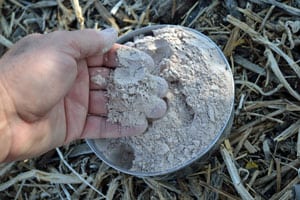
Mineralized SoilToday we  look at another aspect of building healthy, vibrant garden soil that is not only incredibly productive but provides pest and disease resilience. Conventional commercial farming and gardening has mainly paid attention to three elements for the past 65  years or so, pretty much to the exclusion of all else. These are N- Nitrogen, P- Phosphorus, and K- Potassium. You see these in ratios on fertilizer bags, hear about them in conversations about amending the soil and see them pointed to when troubleshooting growth or production problems.

Commercial biological agriculture has found that there are many more minerals and trace elements that are extremely important to the growth, health and productivity of the soil as well as the plant. Some of these are Boron, Silicon, Calcium, Magnesium, Carbon, Potassium and Copper. These are not all of them by any means. By most research, there are about 70-80 minerals and trace elements that are critical to the full development and health of most plants and crops. For instance, a tomato’s nutritional profile includes 56 minerals and trace elements! This is one of the reasons that commercial farmers use the tomato as a benchmark to test the vitality and nutrient content of their soils, as the tomato is “hungry” and needs many nutrients to grow properly. The true test, however, is not limited to how the plant grows, how healthy the leaves are, how many flowers and fruit are set, but how the tomato tastes. If the tomato tastes rich, is juicy and has a complex flavor, then the soil is healthy. If not, then some work remains to get the soil to it’s optimum condition.

Minerals and trace elements are being studied much more now, as many people in agriculture begin to realize that without replacing the minerals and elements taken up by the crops yields begin to decrease, nutrition content drops and pest and disease resilience is lower over time. Studies have shown this for the past 30 years stating the nutritional content in many vegetables have decreased as compared to those of the past. Using a biological and organic method of growing helps, as the manure based compost has several of these mineral and elements, but not nearly enough. Self-sustainable, old time farming had many manure inputs to the compost pile, from different ruminants that contributed microbiological activity to non-ruminants that added finely chopped organic matter. These were better, but still did not address all of the minerals and elements needed for healthy soils.

Two sources are readily available and usable for the home gardener to restore the minerals to the soil. One is sea minerals, the other is volcanic rock dust. Sea minerals are just as they sound- dried seawater. Many commercial farmers are using sea minerals to restore the mineral balance, some using 2200 pounds of sea minerals to the acre! That is just over a ton per acre. My concern with using sea minerals for the home gardener is the salt content, and the potential damaging impacts that salt might have. The second source- volcanic rock dust has no salt and is composed entirely of minerals. Thus there is less danger of over use causing catastrophic damage to your garden!

This article introduces volcanic rock dust in a product known as Azomite. This is a commercially available product, and we have no affiliation or connection with Azomite. They don’t even know we are writing about them! We use this in our gardens, and are using it to “charge” our charcoal in our compost piles, just like we wrote about in the last blog post. We won’t write about or recommend something that we haven’t used ourselves. This is the introduction, the second part of this post will be a discussion and examination of how and why it is so effective.

The article is graciously provided as a reprint from Acres USA.

Mineral Restoration and Utah Rock Dust

by David Yarrow

Like so many young people, Jared Milarch was in a hurry. At age 13, Jared began transplanting native sugar maple seedlings out of his family’s woodlands in northwest lower Michigan. Thinking ahead, Jared planned to sell them as street trees to pay for his college education.

Watching this investment in his future creep skyward, Jared wondered how to speed these trees up — grow taller faster.

“I got impatient because the trees weren’t growing fast enough,” Jared admitted.

About this time, Jared read Secrets of the Soil by Christopher Bird and Peter Tompkins. One chapter described a fertilizer that stimulated plants to remarkable vigor. This “miracle” plant food is a powdered pink clay from central Utah named Azomite, an acronym: A-to-Z Of Minerals, Including Trace Elements. It also goes by the name montmorillonite ore. I asked Jared what Azomite is. “Ground up sea floor bed from Utah mines,” he replied. “They grind it up talcum- powder fine. I guess it’s easier for plants to digest then.” “And for the microbes, too,” added his father. “Because plants don’t really take up nutrients in their root hairs, but from dead and living bodies of microorganisms that ingest the minerals.” Azomite is, in fact, a unique mineral deposit with special biological character. In ancient geologic times, central Utah was an inland sea. Water washing off then-young Rocky Mountains was rich in minerals, and, over eons, this body of water evaporated and shrunk, until today only the Great Salt Lake and Great Salt Desert remain. Bacteria living in this inland sea ate the minerals, then excreted them in oxidized, hydrated and blended forms. The microbial manure accumulated on the sea floor. This sediment has an abundance of over 60 elements, not just three or four, or a dozen.

“I didn’t have a lot of money, so I kept bugging my dad to order a few bags,” remembered Jared. “He reluctantly gave in. When the bags arrived, I sprinkled two tomato soup cans around each baby tree.” After 100 trees, his bags were empty, so his other 400 saplings got none.

The next spring, Jared watched his unfertilized trees grow 12 inches. But the Azomite-treated trees grew fully 3 feet in one spring spurt! In Jared’s years working in his family’s shade tree business, this was unprecedented beyond imagination.

“The results were just amazing!” enthused Jared. But even more, treated trees grew not only taller, but better — healthier. Treated trees had darker color. “Leaf tatter was minimal,” explained Jared. “Caliper [diameter] of their trunks was up, too.”

Impressed by these results, Jared bought more to sprinkle around all his trees. In the family garden, too, where the effect was similar — bigger, stronger plants, with one further benefit. “The taste of the vegetables is dramatically different,” reported Jared. “It’s a great taste!”

His father David — a third-generation nurseryman in this remote corner of northwest Michigan — took notice of Jared’s fertilizer results. In 1996, David decided he had seen enough financial gains on his tree farm, and read enough evidence, to become an Azomite distributor.

“After the Gazette article about Jared’s discovery, we got more and more calls from all over the country about Azomite. The closest distributor to Michigan was the State of Maine, so I decided to stockpile it here so local people don’t pay double freight, and make it available to anyone inclined to try rockdust in their garden, orchard or animal feed.”

Soon the Milarch barn was stacked with bags of pink Utah dust.

“Also, as Midwest horticulture and agriculture schools smarten up, I want to have a stockpile. In the horticulture industry, no one we work with on our trees in all 11 colleges across the United States has ever heard of remineralization with rock dust. They add magnesium to commercial fertilizers, but know nothing about trace elements. It’s time the tree industry — all the way from seedlings to champion trees up to wholesale shade tree industry — tested this in horticulture.”

David Milarch, with decades experience in the family shade tree business, founded The Champion Tree Project. The effects of Azomite on his tree farm urged him to require that every champion tree must be sold and planted with rockdust.

“In the Champion Tree Project, seedlings distributed to schools, children and youth groups for Arbor Day will have a small bag of rock dust, with instructions to sprinkle it around the roots. I recommend seed companies use it in soil mix as seedlings are produced. And right up the ladder when shade tree liners are grown by nurseries, I ask them to use rock dust. Then, as shade trees are planted at job sites, 1- or 2-pound bags must be spread by landscape industry.”

In 1997, Jared — a fast-track senior honor student at Benzie Central High School — enrolled in a botany class in Michigan State University’s Horticulture Extension Program at nearby Northwestern Michigan College in Traverse City.

For his botany lab, Jared decided to scrutinize this Azomite miracle more carefully to understand how a bit of dust boosts plant growth and health. He proposed
a controlled experiment in the college greenhouse to instructor Kirk Waterstripe.

His professor scoffed at the idea at first. Waterstripe, a Rutgers graduate, was skeptical a few ounces of powder from the Utah desert could have such dramatic effects
on plants. “I’ve done some organic gardening,” Kirk admitted, “but haven’t messed with rock powders at all. I heard about greensand and a few things. But I’m always open for new ideas.”

Jared insisted this new idea was worthwhile, so Waterstripe relented and assented.

With advice from his professor and father, Jared designed an experiment to test the effect of Azomite as a soil supplement on tomatoes. Jared’s very simple, but controlled experiment would clearly show any effects from Azomite.

Eight tomato plants (“Fantastic” variety) of uniform size were grown in 1- gallon plastic pots, in a mix of standard potting soil with 6 tablespoons of composted cow manure. Two tablespoons of Azomite were added to the soil of four tomato plants; the other four had no clay mineral supplement.

The plants grew in uniform greenhouse conditions from June 17 to Sept. 9, got 150 ml of water three times a week, and were rotated in the greenhouse to ensure equal exposure to warmth and light. Height was measured from soil surface to uppermost branching point. All measured 30 cm at the experiment beginning, with no visible differences in health.

After 67 days, the tomatoes fed Azomite were easy to distinguish from untreated vines. On several measurable characteristics, Azomite yielded a better plant. Everyone agreed all four plants fed clay dust looked bigger and healthier.

“Color was a very obvious difference,” recalled Jared. “Plants not treated were more yellow in color, while treated plants were a deeper green color. Height was different. Plants that were treated weren’t a lot taller, but they weren’t ‘leggy.’”

Jared’s short written report listed five significant observations he had measured as numerical indications of “better, healthier” plants:
• Average height of Azomite-treated plants was 98.5 cm, compared to 89.75 cm for control plants.
• Whiteflies were found on both treated and control plants by day 28. After day 42, insecticidal soap was sprayed to control whiteflies. But treated plants had much less damage, defined as “honeydew” — sticky, sugary excretions by whiteflies.
• Azomite-treated plants flowered earlier, more prolifically.
• First tomato was on an Azomite treated plant on Aug. 26.
• Treated plants set more fruit.

In a summary as simple as his experiment, Jared wrote: “While four plants per treatment do not provide statistically testable results, this experiment suggests that mineral supplements such as Azomite may help produce plants that are more vigorous and pest-resistant, and that blossom and set fruit sooner than plants grown without any supplement. Further tests, both in lab and field, are highly recommended.”

But from this modest understatement issues a bright light of insight. The implications of this simple experiment could alter farm economics, food production and horticulture methods. Only four plants, but a solid, significant four versus- four superiority. This clear, consistent result confirms a long list of field observations. Definitely, this Utah powder provides some nutrient lacking in greenhouse potting soil — and northwest Michigan topsoil. Something so essential that just a trace of it effects significant gains in growth, vigor, sturdiness, color, flavor, flowering, fruiting, and pest resistance.

Tests of this remarkable result should be repeated not just by one observant and thoughtful high school senior, but also by other universities and high schools in many different locations.

“We need to encourage students, teachers and professors to try this simple experiment’” insisted David. “Not just my state, but around the nation, around the world.”

Waterstripe, impressed by Jared’s results, is singing a new song of praise and wonder. He now sees real potential value in this clay from the Utah desert, plans
to write his own paper for a science journal, and wants to test Azomite on other crops. The professor is even considering writing his doctoral thesis on this trace element effect.

Jared, David and Waterstripe all discussed with the financial potential of early flowering for farmers.

“Early flowering plants can mean money to farmers for having the first crop, and ultimately quicker money for the farmers,” Jared pointed out. “It’s a big fruit farming area around here.”

“Among farmers, for the first guy to market or processing plant,” David explained, “his products reap a premium profit. The first tomatoes. First sweet corn. First watermelons. Also, a shorter growing season means a faster pay-off, because farmers only have one paycheck a year.”

“Flowering is a measure of marketability,” agreed Waterstripe. “If you’re the first to the farmers market with vine ripened tomatoes, hundreds of people will stop by your truck. So, if you can get the plants to flower a week ahead, this gives you an economic advantage.”

“But how do you put a dollar sign on depleted soils?” asked David. “And toxic, even mutagenic, pesticides?”

I insist the single most crucial and significant effect of trace element fertilizers is increased flowering and seed formation. This can’t be adequately measured in
monetary quantity or economic values. Reproduction is the climax in a plant’s life cycle. Any substance that triggers such an increase in this activity activates and fulfills the plant’s full life potential, and is a near ideal and essential plant food.

In an ecosystem, this climax is an outburst of ecstasy as nature rejoices in this peak experience. This isn’t mere substance, it’s essence.

This experience has inspired Jared and mentor Waterstripe on to other experiments with winter oats, a common grain crop for Michigan farmers. “Oats have been — for millennia — a chief animal and human food,” David pointed out. “We eat oatmeal. Horses need oats, and it’s mixed with other animal feeds. And oats are used as a cover crop a lot.”

“Oats are easy to grow and study in a winter greenhouse,” added Waterstripe. “They don’t take a lot of room, and can take a cooler greenhouse.”

I weary of experiments to repeat what we rediscovered a decade ago that was discovered by others over a century ago. How many academics and scientists have to see the facts before serious research begins?

We need experiments to learn, not “if,” but “how” mineral powders restore soil fertility and boost plant vitality. Decades of research by dozens of investigators clearly show this happens, but we still have only fragments of real insight into the secret lives of soil that accomplish this miracle of minerals transformed to living cells.

I asked Jared what he thinks causes Azomite’s remarkable effects.

“I believe there’s a lack of minerals in the soil,” Jared mused. “It was probably depleted with chemical fertilizers. So, this was the first step to put minerals back in the soil. Almost healing the soil enough for the trees to really be able to use what’s in the soil.”

I pointed out that a few tablespoons of clay dust doesn’t supply much nitrogen or potassium. What minerals might this Azomite be feeding trees and seeds?

“I think it may be a balance,” he offered cautiously. “Not just one mineral, but all the minerals. Or it might catalyze other parts of the soil. It may be etheric, too. I’m not sure.”

Whatever substance or essence Azomite supplies, it boosts overall vitality and quality of tomatoes — for seemingly every plant it is fed to. One Michigan news reporter in 1996 headlined Jared’s discovery as “Tree Vitamins” — botanical equivalent to one-a- day health pills.

David Milarch pointed out, “Most soils only have their mineral elements replenished by volcanic action or glaciers. Here in north Michigan that was 10,000 years ago. Our old soils are worn out, especially with chemical agriculture and acid rain.”

The Milarchs’ positive results have been followed by an expansion of Azomite use.

“This year, one fellow got 3 tons for his commercial organic orchard and put 60 pounds on each tree — a generous feeding,” said David. “But that’s how he makes his living. It will probably take two years for fruit trees to fully respond. But if vegetables taste sweeter and are bigger, why won’t it do the same for apples, cherries, peaches . . . ”

“I sold another 1,000 pounds to add to computerized feed mix for dairy cattle to see if it affects butterfat and milk production. This one dairy farmer had a bad problem with hairy wart on his 300 cows’ feet — which is almost impossible to relieve. We figure if cattle are healthier, it will be easier to relieve, so he calculated adding 6 tablespoons a day to his cows’ feed. The old boy who first discovered this stuff fed it to his chickens, and the chicken industry had great success with it.”

I asked Jared what he will do with his new insight into soil fertility.

“For the immediate future, I want to apply this to our family nursery, and to the Champion Tree Project. More likely in the future I’d like to apply it or make it available for world crops — for all of our food crops.”

“And our garden,” injected David. “if it’s good for tomatoes and trees, it’s good for humans, too. So take that thought farther from the garden all the way up the food chain.”

“I’d also like to study other rock dusts,” added Jared. “Azomite is the first one I’ve discovered.”

David ended, “I’d like to see other colleges and students get involved with this investigation of how to restore our soils. And I hope to see the same in the nursery industry and farmers also.”

“In the long run, what would be the reduction in health care costs in humans after we get it into the food chain?” mused David, “and we remineralize our bodies? How many diseases — like AIDS and cancer — would be dramatically diminished?”

David Yarrow is a frequent contributor to the publication Remineralization of the Earth, now merging with Acres U.S.A. He has written extensively on the environment, macrobiotics and Native American issues.

In the next post, we will continue the discussion and examination of the benefits of restoring the minerals to your gardens soil. Stay tuned!
Comments { 9 }

Terra Preta- Magic Soil of the Lost Amazon Part II

What is the Best Way to Build the Health and Resiliency of my Garden Soil?


Dr. Etelvino Novotny at a Terra Preta site in Brazil.

Dr. Etelvino Novotny at a Terra Preta site in Brazil.

Welcome to the second part of Terra Preta, or how using Stone Age agricultural techniques may just be the best way to build the health, fertility, resiliency and nutrient cycling of the soil several fold. We will start with the second part of the article from Acres USA, which is a Q and A session, then will look at several points to consider.

The photo is of a section of Terra Preta that is being studied by Dr. Etelvino Novotny of Brazil, a PhD in Physical Chemistry with a Masters in Soil Science. You can see the depth of the Terra Preta!

Terra Preta Q&A

Why did production of terra preta stop after European contact?
Although the decimation of the Amazonian population and the collapse of the elaborate social systems that supported terra preta creation (to make all that pottery and to make all that charcoal and incorporate it up to 2 feet in the ground really does take a village) was a contributing factor, it was undoubtedly the introduction of the steel axe by the Spanish that, in combination with the impact of contact, led to slash-and-burn by small bands replacing slash-and-char by large groups. When clearing land with a stone axe, a conservation of all biomas and an intensification of soil production becomes a necessity. Steel axes — and, later, chainsaws — contributed to exploiting the very short-term benefits of ash. It must be remembered that traditional methods can die out in a single generation, and that in Amazonian social structure, the elders were responsible for all technical knowledge. It makes sense that the elders were the hardest hit by epidemics, and the loss of their cultural knowledge combined with social disruption would lead to the replacement of a deeply effective technology with an less-effective mimicry.

Did natives use special microbial brews to inoculate the soil to create terra preta?
There is no proof that a “mother” culture was used for starting terra preta. Current research indicates that the incorporation of charcoal of certain qualities (created in relatively low heat, for example) in combination with appropriate initial fertilization (often, in university tests, with conventional fertilizers that are damaging to soil life) will produce a substantial increase in yields. It is assumed that the char provides such an effective habitat for microbes that effective communities will rapidly develop within most soils. What we don’t know yet is whether the simulated terra preta will have the ability to maintain its fertility for as long as the ancient form.

Has terra preta been discovered outside of the Amazon?
Yes, high-carbon terra preta-like dark soils have been discovered in Holland, Japan, South Africa and Indonesia and are currently being studied.

Can carbon inputs other than charcoal be used?
The Japanese are extensively investigating the use of coal dust for promoting field fertility. Coal dust does seem to reproduce many of the positive effects of wood charcoal. The research of Siegfried Marian on the benefits of carbon incorporation, as reported in Leonard Ridzon and Charles Walters’ The Carbon Connection and The Carbon Cycle, led to the development of Ridzon’s NutriCarb product (no longer being produced), which claimed agricultural benefits very similar to those claimed for terra preta . Those who want to use coal dust for soil fertility need to make certain that the dust is from brown coal, which is more humic, and that the coal does not contain toxins.

Why is terra preta often linked to alternative energy and climate change?
Terra preta is a carbon sink, as is most carbon in the soil. Slash-and-burn agriculture contributes greatly to global warming. If terra preta technologies were applied to tropical farming, less land would have to be cleared for farming, and if farmers in temperate zones such as the Midwest incorporated charcoal or other chars into their soil, more carbon could be sequestered. If this char is produced by appropriate technology, such as pyrolysis, both fuel and a “restorative, high-carbon fertilizer” can be produced. This process does not require wood — it is just as effective when agricultural wastes, such as peanut shells, are used as input. A good place to learn about this technology is at www.eprida.com.

How much charcoal needs to be incorporated?
In published reports on pot tests of the effect of charcoal on plant growth, incorporation at 20-30 percent by weight tended to consistently produce the most benefit. In row crops, this would translate to 30 percent by weight of the top 6 inches.

Are there benefits for plant health from terra preta ?

Better plant growth and health is evident with the use of native terra preta. Current investigations are primarily being conducted by archaeologists, geologists and soil scientists. There is no evidence of terra preta studies by an agriculturist, but positive reports from growers suggest that eco-farmers would be well advised to investigate terra preta technology.

Allan Balliett is a biodynamic farmer and educator who operates a CSA serving families in the Washington, D.C. metro area. He is the founder and moderator of BD Now!, the international progressive biodynamic food and farming discussion listserve. He can be reached at Fresh and Local CSA, P.O. Box 3047, Shepherdstown, West Virginia 25443, phone 304-876-3382, email allan@FreshAndLocalCSA.com, website www.freshandlocalcsa.com.

This ends the article from Acres USA.

It is interesting to note that of all the research and reading that I have done, most of the knowledge is indeed from the University research departments. Some are archeological based, others are looking at the carbon sequestering elements of charcoal or bio-char, and more than a few are interested in the continual fertility and regeneration of the soils once they have had charcoal incorporated into them.There are very few resources devoted to the thought of  how to incorporate charcoal into gardening and current agricultural practices.

The following is from a Biochar Discussion List-

The following benefits occur with additions of biochar to the soil, in amounts ranging from 3 oz. per square foot up to 16 oz. per square foot-

  • Enhanced plant growth
  • Suppressed methane emission
  • Reduced nitrous oxide emission (estimate 50%)
  • Reduced fertilizer requirement (estimate 10%)
  • Reduced leaching of nutrients
  • Stored carbon in a long term stable sink
  • Reduces soil acidity: raises soil pH
  • Reduces aluminum toxicity
  • Increased soil aggregation due to increased fungal hyphae
  • Improved soil water handling characteristics
  • Increased soil levels of available Ca, Mg, P, and K
  • Increased soil microbial respiration
  • Increased soil microbial biomass
  • Stimulated symbiotic nitrogen fixation in legumes
  • Increased arbuscular mycorrhyzal fungi
  • Increased cation exchange capacity

Sounds pretty impressive, doesn’t it? There are many pages of discussions on the positive impacts of charcoal or biochar, what is the best method of making  biochar, how much to add to the soil, etc. and etc. It is easy to read oneself blind. It is wonderful to see so much attention devoted to studying the benefits of charcoal and how it interacts with the soil. The home gardener, however, is usually more concerned with how to incorporate an idea into their garden than reading all of the latest research. Let’s face it, sequestering carbon, qualifying for carbon credits, and reducing greenhouse gases for the home gardener is a smaller interest than the increased soil fertility, nutrient cycling, nitrogen fixing and improving plant growth, health and productivity that charcoal provides.

What we do know is this-

  • Charcoal is created by burning wood or similar materials in an oxygen free environment. Charcoal is not ash that comes out of your wood burning stove.
  • The addition of charcoal to soil has profoundly positive effects that are extensive and long lasting. By some estimates the lifespan of charcoal in soil is in excess of 1,600 years.
  • The amount needed is quite small- from 3 oz. per square foot to an upper limit of 16 oz. per square foot.
  • There is a definite, noticeable period of productivity lag after adding charcoal directly to the soil.
  • Charcoal needs to be “charged” or “activated” with minerals and trace elements prior to it being able to contribute to soil fertility. The best way to do this is in compost, preferably a manure-based compost that already has minerals and trace elements.
  • Adding a mineral and trace element rich supplement to the charcoal/compost greatly increases the nutrient cycling and “activation” of the charcoal
  • The time period needed to “charge” the charcoal is at least six months, preferably a year.
  • Soon after adding charcoal to compost, the fungal, microbial and earthworm activity drastically increases.
  • Adding charcoal to compost speeds up the decomposition by several times.
  • The ideal size for the charcoal chunks is between the size of rice and corn.

So how, exactly, does one go about incorporating charcoal into the garden? Charcoal is relatively easy to find. Lowe’s or Home Depot have it in the grill section. Look for “Lump” or “Hardwood” charcoal. Stay away from briquets, as they are pressed and formed out of much more than plain charcoal. They usually have chemical or petroleum fire-starting compounds in them along with fillers. Come to think of it, you probably don’t want to be cooking with them, either, as you don’t want the fillers and fire-starters on your burgers! Right now a 8.8 Lb bag is $6.99 locally. Sam’s Club has 40 Lb bags of mesquite charcoal for $17.00 in the spring and summer. It will look just like a burned log or branch.  Once you get your charcoal, it needs to be broken or crushed to smaller pieces. The optimum size is between a grain of rice and a kernel of corn. Be aware of the dust created from crushing the charcoal, as you don’t want to breathe it. The dust is fine for the compost pile. To crush it, you need to get creative. I have cut an old propane tank in half to make an industrial pestle and mortar, but a 3 Lb drilling hammer or hand sledge hammer on a piece of concrete will do just fine. A rock will do just fine. Remember, this is Stone Age technology here, so don’t over-think or over-complicate it! You want to create crushed charcoal with what tools and materials you have available. Once it is crushed, add it to the compost pile or bin. Make sure to mix it in so it will make the most contact possible with the compost. A very good technique is to crush a little each time you add to the compost. This mixes the charcoal evenly.

After incorporating charcoal into your compost, make sure it has sufficient moisture and let it do it’s magic for the next 6 months. You should see microbial, fungal and earthworm activity starting in about a month, along with an accelerated breakdown of the compost. At the end of the 6 months, it should resemble rich, humic soil that is full of life! Then you feed the garden soil with a top layer of about 2 inches in the fall and spring and watch everything in your garden grow like crazy.

Our next installment on building your garden soil will focus on the mineralization aspect, or how to get a sufficient amount of minerals into your soil without having to lug around endless bags of soil amendments! It ties in closely with the charcoal and compost, so stay tuned…

Comments { 6 }